





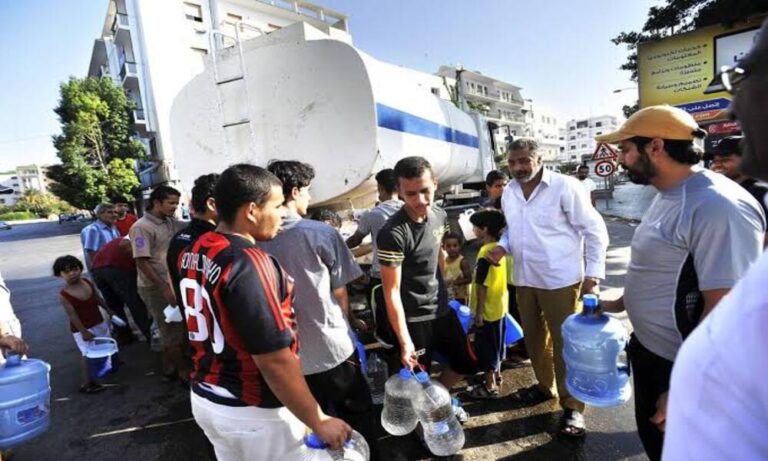
A human rights organization has issued a stark warning regarding Libya’s rapidly deteriorating water security, citing a dangerous combination of crumbling infrastructure and systemic management failures.
In a statement marking World Water Day on March 22, 2026, the Solidarity Organization for Human Rights highlighted that Libya relies on artificial river systems and groundwater for over 97% of its supply, a structural dependency that leaves the nation highly vulnerable to service disruptions.
This vulnerability is being exacerbated by frequent sabotage, illegal connections, and a chronic lack of technical maintenance. The organization noted that the degradation of the water network is not just a technical issue but a humanitarian one, as persistent shortages are now severely impacting schools, hospitals, and detention centers. In some facilities, the lack of oversight has reportedly led to the predatory sale of water to inmates, signaling a breakdown in basic sanitary conditions and public health protections.
The current crisis underscores the urgent need for a shift in national water policy. Experts are calling for a move away from total reliance on finite groundwater, recommending significant investment in desalination technologies and alternative sources. Strengthening the physical protection of the existing Great Man-Made River infrastructure and improving transparency in how the water sector is governed are seen as essential steps to prevent a total systemic collapse.
Ultimately, the report emphasizes that secure access to drinking water is a cornerstone of Libya’s long-term stability. As water scarcity becomes an increasingly dominant issue across the region, establishing a sustainable and equitable management model is viewed as a critical requirement for the country’s development and social cohesion.
MK/AK/te/Sf/fss/abj/APA