



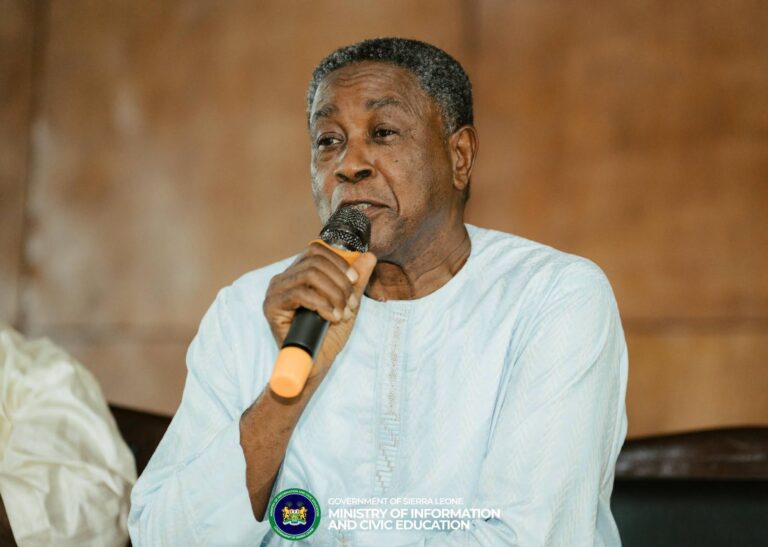
Presidential Spokesman Alpha Khan has characterized Sierra Leone’s recent constitutional and electoral updates as a vital landmark in the nation’s democratic evolution, emphasizing that structural policy changes are essential for fostering peace, political inclusion, and long-term national stability.
Addressing journalists during the government’s weekly press briefing at the Miatta Civic Centre in Freetown, Khan reflected on Sierra Leone’s historical shift from a single-party state to a multi-party democracy in 1991, framing it as a defining juncture in the country’s political narrative. He explained that the bitter lessons of the civil war, alongside the findings of the Truth and Reconciliation Commission, underscored the absolute necessity of reinforcing democratic frameworks to ensure political violence remains a thing of the past.
Khan emphasized that the constitutional review was built on unprecedented nationwide public engagement, incorporating thousands of individual interviews, interactive radio broadcasts, and grassroots town halls designed to ensure the resulting recommendations accurately represent the will of the populace.
A central focus of the reform agenda involves significant adjustments to the electoral framework, including the implementation of proportional representation and refined vote thresholds for presidential contests. These adjustments are intended to mitigate the risk of electoral friction—particularly surrounding high-stakes run-off elections—while simultaneously broadening political representation.
Additionally, the Presidential Spokesman highlighted gender parity as a core pillar of the reform strategy, asserting that expanding women’s access to elected office is indispensable for sustaining a peaceful, equitable society. Khan noted that the executive branch formally endorsed the primary recommendations through an official White Paper, which laid the groundwork for subsequent legislative actions.
Closing his remarks, Khan reminded citizens that Sierra Leone’s modern governance model has been forged through historical adversity, including war and international sanctions. He urged the public to safeguard these democratic gains and remain committed to ongoing governance reforms that protect the interests of coming generations.
ABJ/APA