





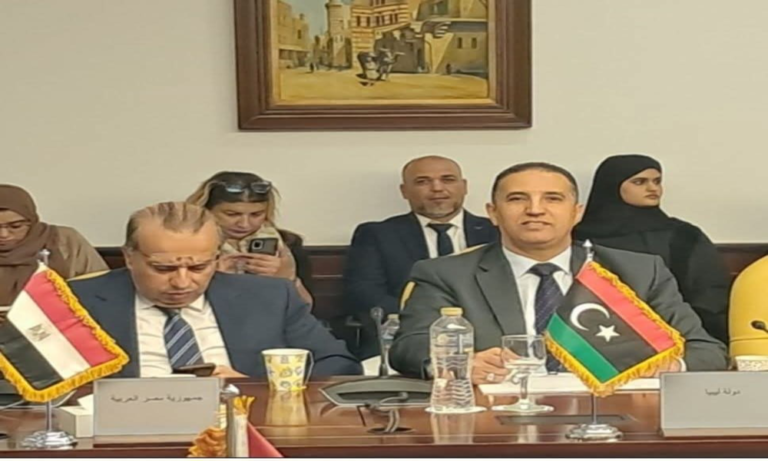
Libya took part on Monday in Cairo in the 56th meeting of the Arab Permanent Committee for Communications and Information, held amid regional coordination efforts on digital policies and the development of the ICT sector in the Arab world.
The meeting was hosted at the headquarters of Egypt’s Ministry of Communications and Information Technology and forms part of the preparatory work of the Council of Arab Ministers of Communications and Information, an organ of the League of Arab States.
Representatives of Arab member states, accredited observer entities to the council, as well as regional organisations and partners operating in the fields of communications and information technology, attended the session.
Libya was represented by the General Authority for Communications and Informatics, the national body regulating and developing the sector.
Exchanges focused mainly on reviewing the outcomes of the committee’s working groups, assessing the activities carried out by observer entities, and examining the progress of the Arab strategy for communications and information, known as the Arab Digital Agenda.
Participants also debated ways to strengthen the development of information and communication technologies (ICTs) in Arab countries, against the backdrop of the rapid acceleration of global digital transformation.
According to Libya’s General Authority for Communications and Informatics, the country’s participation carries strategic importance. It aims to reinforce Libya’s presence within specialised regional bodies, strengthen its role in shaping common Arab policies, and contribute to discussions on future directions for the digital sector in the region.
The authority noted that such meetings also provide a platform for exchanging expertise among Arab countries, enhancing institutional capacities, and supporting collective efforts to reduce the digital divide, particularly in terms of access to infrastructure, digital skills and online services.
From an economic and development perspective, the authority added that stronger regional cooperation could help attract investment into Libya’s communications and ICT sector. It could also support the implementation of joint digital projects with added economic value, while providing reference frameworks for shaping national policies, legislative frameworks and sectoral plans in Libya.
MK/sf/lb/as/APA