





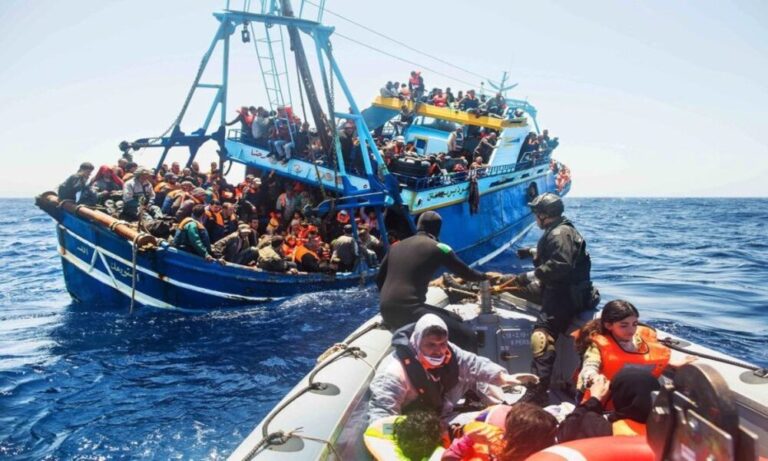
With more than 1,000 migrants confirmed dead in the Mediterranean since the start of 2026, the International Organization for Migration (IOM) is sounding the alarm over a surge in shipwrecks.
Most fatalities are linked to departures from Libya, prompting the agency to call for bolstered maritime search-and-rescue operations and the establishment of safe, legal pathways for migrants.
The IOM reported Friday that approximately 1,000 migrants have perished at sea since the beginning of the year. According to the UN agency, the majority of the ill-fated crossings originated from the Libyan coastline, reaffirming the country’s central role as a primary departure hub for migratory flows toward Europe.
The death toll has spiked in recent weeks, with at least 180 people reported dead or missing across five separate incidents. One of the most significant tragedies involved a vessel that departed from the Tajoura region in Libya, capsizing in the Central Mediterranean with approximately 120 people on board. Only 32 survivors were rescued. Two bodies were recovered, while over 80 passengers remain missing.
This string of maritime disasters continues to grow. The IOM specifically noted the discovery of 19 bodies aboard a drifting boat that had departed from Zuwara and was found near the Italian island of Lampedusa. Other shipwrecks have been reported off the coast of Crete, Sfax in Tunisia, and near Turkish shores, illustrating the expanding geographical footprint of maritime migration routes.
Detailed data reveals a rapid succession of incidents. On March 28, 22 people died off the coast of Crete following a departure from eastern Libya. Two days later, a shipwreck near Sfax resulted in 19 confirmed deaths and left some 20 others missing, highlighting the sustained intensity of crossing attempts across multiple Mediterranean axes.
In light of these developments, the IOM is highlighting the limitations of current search-and-rescue (SAR) frameworks. The organisation is advocating for a reinforcement of operations at sea and the implementation of formal, safe legal channels.
This stance contributes to the ongoing international debate regarding the management of migration flows and the responsibilities of coastal states.
MK/AK/Sf/lb/as/APA