





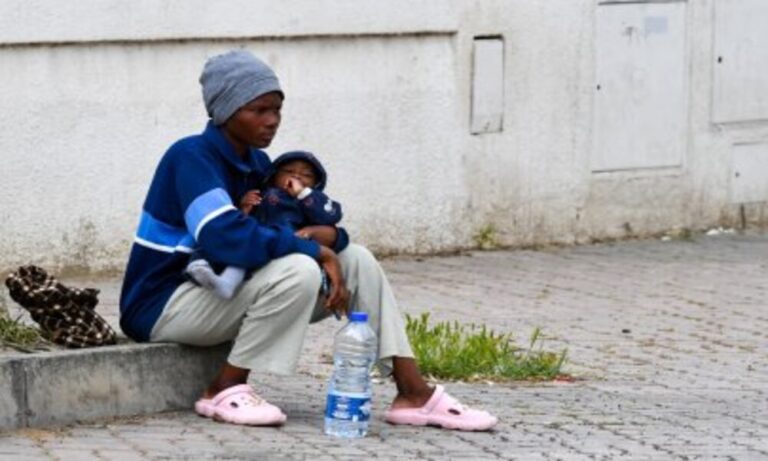
A group of migrant women and children, most of them from sub-Saharan Africa, were arrested last week in the Tunisian capital for begging and placed in detention at the El Ourdia centre in the southern suburbs of Tunis.
According to several civil society organisations, the measure is “unprecedented” and exposes these families to the imminent risk of expulsion to the Libyan border, in violation of international law.
The incident dates back to Thursday, 13 November, when a 26-year-old Sierra Leonean man, who had been living in Tunis for four months, returned from work to find that his wife and their one-year-old daughter were missing. He only learned the next day, through an indirect phone call, that they had been arrested by plainclothes police while Sarah was begging at Barcelona Square in the city centre.
According to his account, the officers approached her “without presenting any identification” before taking her and the child to the El Ourdia centre, where 16 other women and 23 children are being held, some of them separated from their parents.
The couple had left the Sfax region following repeated police operations targeting informal camps. In Tunis, deprived of access to employment and unable to receive remittances from abroad — two restrictions imposed by the authorities since the summer of 2023 to curb departures to Europe — they survive on odd jobs and begging. “What I earn isn’t enough. My wife helps when she can,” Victor said.
For local NGOs, this mass arrest marks a turning point. “It’s the first time we have seen women and children detained for begging,” said one activist, who requested anonymity.
Although begging is an offence inherited from the colonial-era penal code, it has until now resulted in brief detentions followed by quick releases, especially for women accompanied by children. “This time, the situation is very worrying. We are seeing an escalation, in violation of the international conventions ratified by Tunisia,” she added.
The detention conditions described by Sarah are deemed alarming: insufficient food, lack of clothing and a shortage of beds. On 16 November, a video released by migrant rights advocate David Yambio and the collective Refugees on Tunisia showed women and children crowded into a small room with only a few beds, confirming the inadequacy of the space being used as a detention facility.
The UN Human Rights Office, UNHCR, UNICEF and the International Organisation for Migration have been alerted, but no progress has been reported so far. The families remain detained in El Ourdia, facing the prospect of being transferred to the Libyan border, where many migrants have already been abandoned in recent months in extremely dangerous conditions.
MK/ak/lb/as/APA