



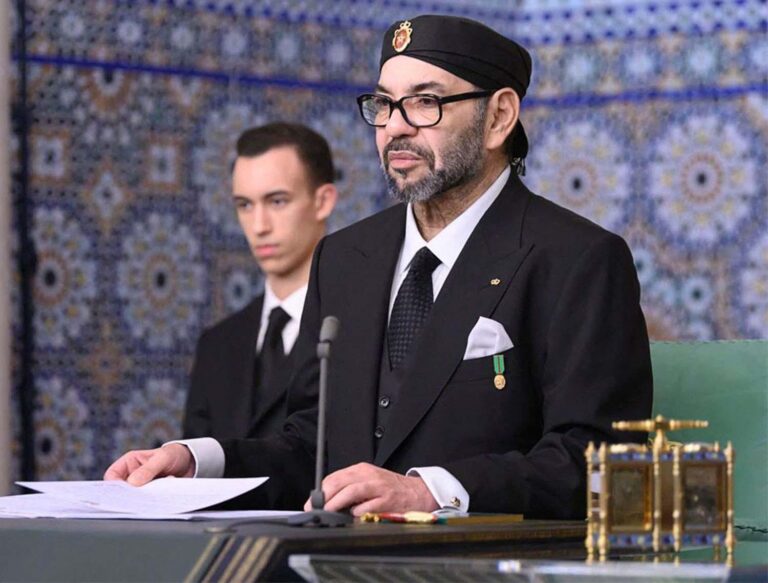
At the initiative of King Mohammed VI, a high-level meeting was held on Monday, November 10, 2025, at the Royal Cabinet in Rabat over the autinomy initiative for the Western Sahara.
Some of the key participants were the king’s advisers Taib Fassi Fihri, Omar Azziman, and Fouad Ali El Himma, alongside the leaders of political parties represented in Parliament, the Minister of the Interior, and the Minister of Foreign Affairs, African Cooperation and Moroccan Expatriates.
According to a statement from the Royal Cabinet, the meeting is part of the directives issued by King Mohammed VI to update and refine the autonomy initiative proposed by Morocco within the framework of its sovereignty and territorial integrity.
This initiative follows UN Security Council Resolution 2797, adopted at the end of October, and the royal decision announced in the October 31 address, calling for an updated version of the autonomy plan to take into account new regional and international dynamics.
The meeting highlights the governance scheme championed by King Mohammed VI, based on: a participatory approach, involving national political forces in defining strategic orientations; broad consultation, engaging institutions and political actors; and a proactive vision, aimed at consolidating Morocco’s sovereignty over the Western Sahara through a realistic, inclusive, and sustainable project.
According to the statement, the king’s advisers invited political parties to submit their contributions and memoranda outlining their views on the updated framework of the autonomy initiative, to enrich the reference document before its final presentation.
Political leaders, for their part, praised the royal initiative of national consultation and reaffirmed their commitment to the sovereign framework defined by King Mohammed VI, viewed as the guarantor of the coherence of national policies and the defense of the country’s strategic interests.
This mobilisation is part of the royal policy aimed at transforming the Western Sahara issue into a driver of unity, stability, and regional development, while strengthening Morocco’s position on the international stage as a nation of dialogue and constructive solutions.
MK/ak/ac/lb/as/APA