





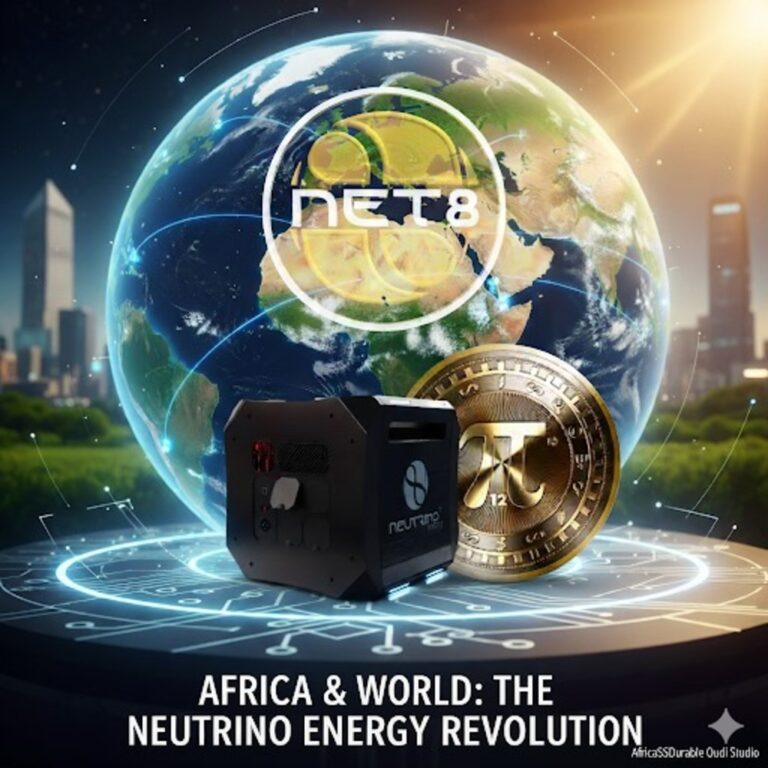
A new strategic partnership between German-based Neutrino Energy Group and pan-African organization Africa55Durable is promising to revolutionize Africa’s energy landscape.
The alliance aims to provide the continent with clean, autonomous, and traceable electricity using a new technology called neutrinovoltaics.
The core of this initiative is a groundbreaking technology that captures energy from neutrinos and other invisible radiation and converts it into electricity. This is made possible through nanostructured materials made of graphene and silicon.
These materials are integrated into several key products: The Neutrino PowerCube: A compact and silent 5 to 6 kW generator designed to provide electricity for homes and businesses, even in remote areas. The “3 Pis” Mobility Systems: This includes the Pi Car, a self-charging electric vehicle that needs no charging infrastructure. It can gain up to 100 km of range with just one hour of exposure to ambient radiation. The Pi Fly is designed for extended-endurance drones for medical and logistical transport, while the Pi Nautic enables autonomous propulsion for marine vessels.
A comprehensive plan for African deployment
The partnership is more than just a technological showcase; it’s a strategic plan for industrial and diplomatic deployment across Africa. Ousmane Diakite, the founder of Africa55Durable, is leading the effort to implement these technologies in several countries, including Côte d’Ivoire, Senegal, Morocco, and Rwanda.
The plan includes a number of applications, such as: Deploying PowerCubes to electrify rural and urban homes. Introducing self-charging vehicles and drones for transport and humanitarian aid. Creating a new system of energy and financial management using blockchain technology. Two new tokens, NET8 Coin and Pi-12, will be used to track energy transactions and vehicle mobility, enhancing transparency and sovereign control.
The partners hope this initiative will not only provide every African village and home with reliable, clean energy but also position the continent as a global leader in the clean energy transition. A German-Indian cooperation is already in the works to industrialize the Pi Car, with an estimated investment of €2.5 billion.
AP/fss/abj/APA