





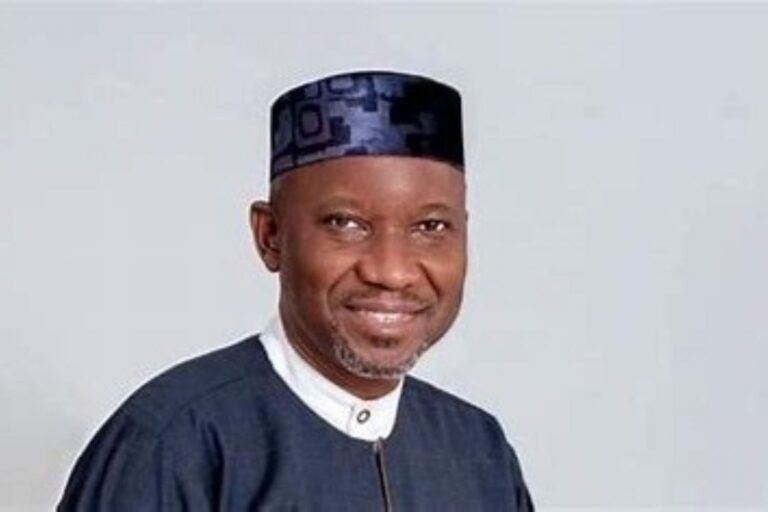
Nigeria’s Minister of State for Petroleum Resources (Gas), Ekperikpe Ekpo, says that the government has unveiled fresh measures to strengthen Nigeria’s gas-to-power value chain.
Speaking during his ministerial address at the National Gas Day session of the 9th Nigeria International Energy Summit 2026 on Thursday in Abuja, Ekpo described natural gas as the backbone of electricity supply and a critical enabler of the Nigeria’s industrialisation drive.
He disclosed that gas currently fuels over 70 per cent of Nigeria’s on-grid electricity generation, but admitted that structural weaknesses across supply, infrastructure and commercial arrangements have continued to constrain power delivery to homes and industries.
According to him, the administration of President Bola Tinubu is deliberately reinforcing the entire gas-to-power ecosystem to support economic growth, industrial productivity and energy security.
Ekpo also announced the expansion of its free liquefied petroleum gas cylinder distribution programme to cover all six geopolitical zones as part of efforts to deepen clean cooking adoption, reduce deforestation and cut household reliance on firewood and charcoal.
“Today, gas fuels over 70 per cent of Nigeria’s on-grid electricity generation. But to power our industrialisation ambitions, we are strengthening the entire gas-to-power chain,” the minister said. “Our focus is not just about producing gas; it is about ensuring that gas moves seamlessly from the wellhead to power plants in a commercially viable, predictable and sustainable manner.”
He explained that the Nigerian Government’s strategy prioritises long-term, bankable gas supply agreements for power plants, noting that inconsistent gas supply and payment risks have historically discouraged investment in both upstream gas development and power generation.
“We are working to put in place long-term, commercially viable gas supply agreements that give confidence to producers and guarantee reliable fuel to power plants. Without certainty of supply and payment, you cannot unlock the scale of investment required to stabilise electricity generation,” he said.
The minister added that the government was sustaining the implementation of the National Economic Council-approved power sector debt resolution framework, which is aimed at addressing legacy debts owed to gas suppliers and generation companies.
“The debt overhang in the power sector has been a major bottleneck. We are implementing the NEC-approved framework to resolve these liabilities because gas suppliers must be paid if power plants are to continue operating,” he said.
He also disclosed that the administration was accelerating the expansion of critical gas infrastructure, including pipelines, processing facilities and metering systems, to eliminate supply disruptions that have repeatedly forced power plants offline.
The minister said, “We are expanding pipelines, processing plants and metering infrastructure because molecules in the ground do not generate electricity unless the infrastructure exists to move them. At the same time, we are deepening collaboration with the power sector to remove operational and commercial bottlenecks across the value chain.”
As part of the reforms, President Tinubu has approved the establishment of a National Gas Infrastructure Command Centre, which will coordinate and monitor gas infrastructure nationwide in real time.
“The National Gas Infrastructure Command Centre will allow us to monitor, coordinate and optimise gas assets across the country. It is a critical tool for improving reliability, transparency and response time,” the minister stated.
GIK/APA