





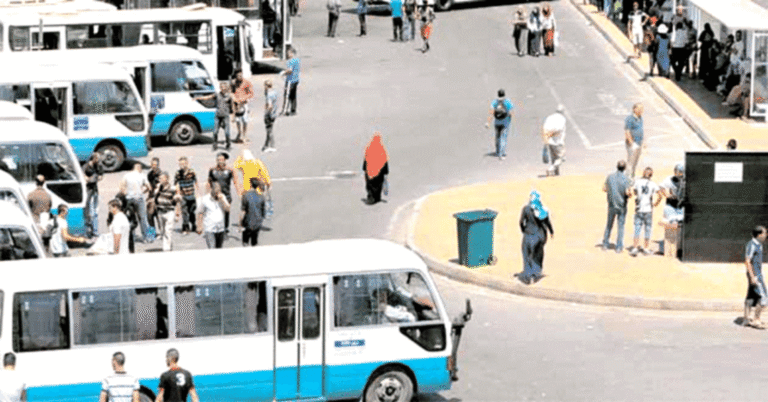
Public transport in the Algerian coastal city of Bejaia is facing a crisis of anarchy and dilapidation, frustrating residents and tarnishing the city’s image.
Despite occasional interventions by local authorities, operators continue to flout regulations, leading to dirty buses, non-compliance with rules, and chaotic traffic.
According to residents, operators are known for a series of shortcomings, including dirty vehicles, a lack of official attire for staff, excessively long stops, boarding passengers outside of designated stations, and overloading buses. More serious violations include the absence of fire extinguishers and the failure to operate night shifts.
The situation is worsened by an aging bus fleet. Many private buses are rarely replaced, offering precarious travel conditions with dilapidated seats, defective doors, and poor cleanliness. The state-owned Bejaia Urban Transport Company (Etub) maintains a better standard but is unable to compensate for the overall deficiencies in the sector.
The disorder in the public transport system is a major cause of daily traffic jams in Bejaia City, where hundreds of buses and minibuses are in continuous operation. Officially limited to three minutes, stops are systematically exceeded, disrupting traffic flow. Speeding, arbitrary changes to routes, and a general disregard for timetables further exacerbate the daily inconvenience for commuters.
Since the sector was opened to private operators, the pursuit of profit appears to have taken precedence over adherence to safety and quality regulations. To improve the situation, the city is looking to introduce new high-capacity buses and, more importantly, to implement plans for three cable car lines. While these projects are expected to alleviate congestion, the population of Bejaia remains trapped in a transport system in desperate need of modernization and regulation.
MK/Sf/ac/fss/abj/APA