





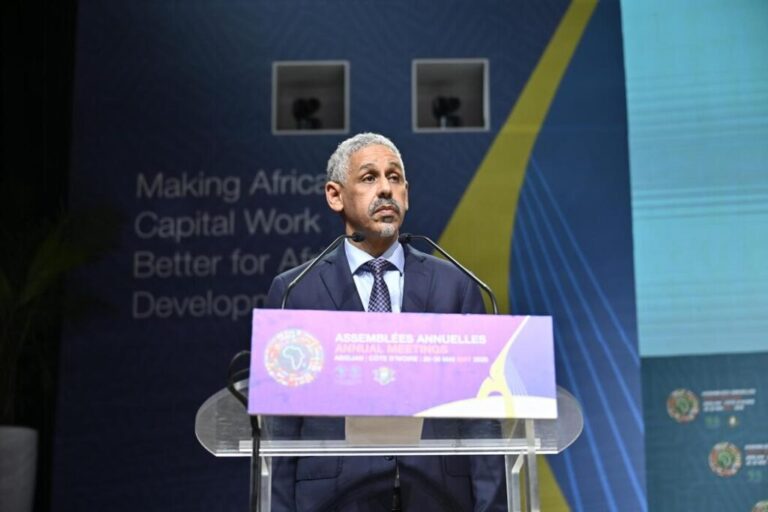
Sidi Ould Tah has officially become the ninth President of the African Development Bank (AfDB), taking the reins of the pan-African financial institution on September 1, 2025.
He was sworn in during a handover ceremony at the Sofitel Hotel in Abidjan, the AfDB’s headquarters.
A career of transformative leadership
Mr. Tah is a well-known economist and banker with over four decades of high-impact leadership in both African and international institutions. From 2015 to 2025, he served as the President of the Arab Bank for Economic Development in Africa (BADEA). During his tenure, BADEA’s assets grew from $4 billion to nearly $7 billion, and its credit rating was raised to AA+/AAA.
Under his leadership, BADEA’s annual project approvals increased twelvefold, and disbursements grew eightfold. He successfully developed and implemented BADEA’s first ten-year strategy and long-term vision, aligning them with the African Union’s Agenda 2063.
Mr. Tah’s experience also includes serving as Minister of Economy and Finance for Mauritania, where he represented the country on the boards of major institutions like the AfDB and the World Bank.
New vision for the AfDB
The new president inherits a bank with a capital of $318 billion and a “AAA” rating maintained for ten consecutive years. His leadership comes at a time when Africa’s economic needs are more urgent than ever.
Mr. Tah has outlined four strategic pillars to guide his work and position the AfDB as a top provider of development finance for the continent: unlocking Africa’s financial resources, reforming and consolidating Africa’s financial sovereignty, turning demographics into a dividend, and building Resilient Infrastructure
He has also committed to working closely with donor countries to ensure a successful replenishment of the African Development Fund (ADF), which is the bank’s primary funding source for low-income countries in Africa.
Mr. Tah’s expertise comes at a critical time, as African economies are showing resilience despite global challenges like geopolitical shifts, a decline in foreign aid, and rising inflation. According to the 2025 African Economic Outlook report, the continent’s growth is projected to increase from 3.3% in 2024 to 3.9% in 2025. The report also notes that 21 African countries are expected to see growth of more than 5% in 2025.
AP/Sf/fss/abj/APA