



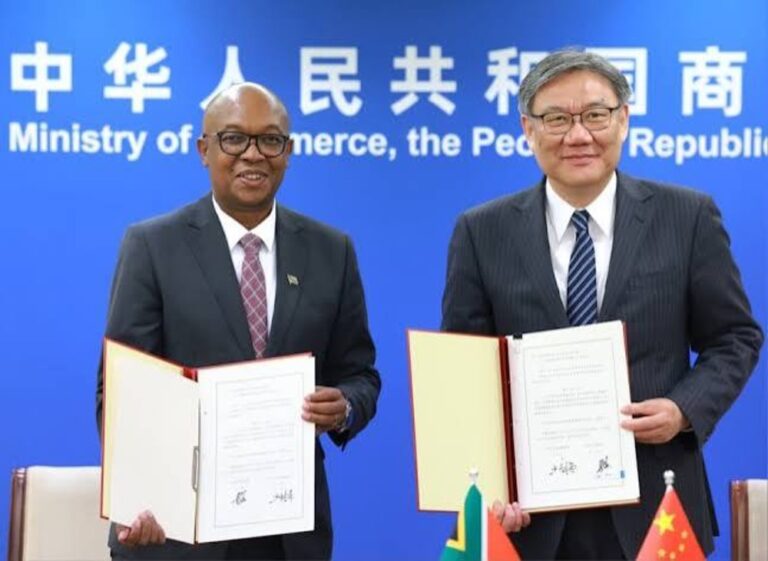
South African enterprises have been urged to act decisively and convert duty-free access into tangible export sales under China’s zero-tariff initiative, according to Trade, Industry and Competition Deputy Minister John Steenhuisen speaking at the launch of the 2026 China-Africa Economic and Trade Expo (CAETE) at the Sandton Convention Centre.
Designed to strengthen two-way trade, attract capital inflows, showcase new products, and foster industrial and economic cooperation between China and African nations, the exhibition comes as China stands as South Africa’s top global trading partner and South Africa remains a key economic partner for Beijing across the continent.
Introduced on May 1, 2026, and scheduled to run through April 2028, China’s zero-tariff scheme removes customs duties on eligible African exports shipped to China, provided they meet rules of origin requirements and align with the relevant tariff schedule. Steenhuisen emphasized that because the zero-tariff window is temporary, South African firms must waste no time turning market access into real commercial sales and lasting buyer relationships, citing the China-Africa Economic Partnership Agreement for Shared Development—signed in February 2026—as a guiding framework for trade, investment, and industrial growth. He pointed to a Chinese proverb on working together with one heart and one effort to illustrate the spirit of trust and practical collaboration required for shared prosperity, while noting that Pretoria is also progressing talks on a SACU-China Early Harvest Arrangement to establish a more predictable, sustainable foundation for reciprocal trade preferences and long-term market entry.
Addressing participants at CAETE, Steenhuisen encouraged South African businesses to connect directly with buyers, study market requirements, and build commercial partnerships, while inviting Chinese investors to set up or expand operations in South Africa, collaborate with domestic manufacturers, and build skills and technologies serving both local and regional markets. Ultimately, he noted, the true measure of success lies not in the number of meetings held or agreements signed, but in tangible outcomes—whether a business opens its doors, a factory expands, and a young South African secures meaningful employment.
ABJ/APA