





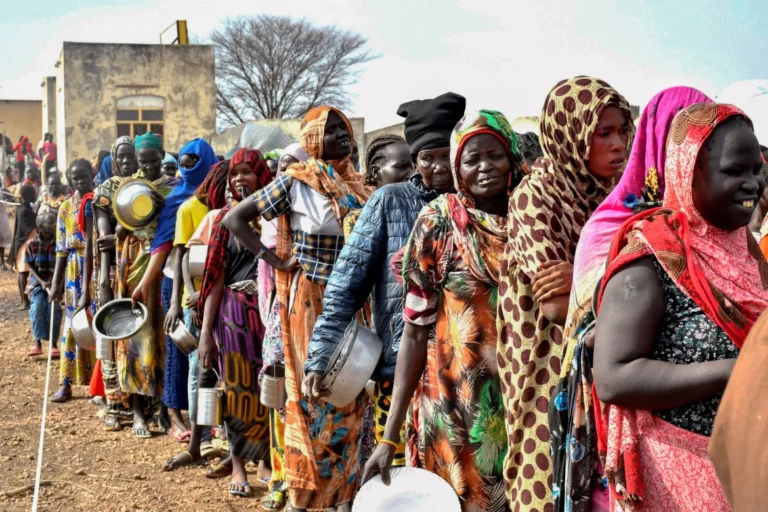
Sudan stands at the epicentre of one of the world’s “most severe” humanitarian crises, affecting over 30 million people, the UN warns on Friday.
Out of this figure, 9.6 million displaced from their homes and nearly 15 million children caught in a struggle for daily survival, says the organisation in a statement.
Kelly Clements, Deputy High Commissioner at the UN refugee agency (UNHCR) describes the situation as ”one of the worst protection crises we’ve seen in decades”.
Sudan has been blighted by armed conflict between the regular Sudanese army and the paramilitary Rapid Support Forces since April 2023 during which thousands of people were killed mostly civilians.
Fighting has continued in recent weeks as RSF fighters attempt to take control of the country’s main airport, causing more humanitarian crisis.
UNHCR together with other UN agencies such as International Organization for Migration (IOM), the UN Children’s Fund (UNICEF), and the World Food Programme (WFP) have issued a joint humanitarian appeal for urgent action to address “the immense suffering and growing dangers” confronting millions across Sudan.
Homes reduced to rubble
Alhough fighting in the capital Khartoum and other parts of Sudan has eased, nearly 2.6 million people have been returning to dire situations with homes in rubble and public services such as access to water, healthcare, or education non existent.
“I met people coming back to a city still scarred by conflict, where homes are damaged and basic services are barely functioning. Their determination to rebuild is remarkable, but life remains incredibly fragile”, says Ugochi Daniels, IOM’s Deputy Director General for Operations.
The spread of diseases such as cholera, dengue, and malaria, combined with soaring malnutrition rates, is putting thousands at imminent risk of death without immediate assistance, IOM says.
Over 260,000 civilians still under siege
Meanwhile, over 260,000 civilians, including 130,000 children, remain under siege in El Fasher, North Darfur, in what the UN agencies have called a “deeply concerning” situation.
The siege has lasted for over 16 months as families remain cut off from food, water, and healthcare supplies, leaving health systems collapsing.
Reports are also rife of killings, sexual violence, and forced conscription into armed militias which the UN said continue to rise.
“Entire communities are surviving in conditions that defy dignity”, laments Ted Chaiban, UNICEF Deputy Executive Director.
Chaiban says malnourished children aside from facing possible death from preventable diseases are also exposed to the violence by perpetrators of the Sudanese civil war.
”Families are doing everything they can to survive, showing extraordinary resolve in the face of unimaginable hardship,” he adds.
Challenges ahead
The UN says funding shortfalls are making it increasingly difficult for its agencies and partners to deliver appropriate aid.
Totalling US$4.2 billion, the 2025 Humanitarian Response Plan for Sudan remains critically underfunded at only 25 percent, it laments.
“The humanitarian community is ready to respond, but it cannot do it alone —urgent global support is needed to save lives and help communities rebuild”, the UN relief agencies add.
WN/as/APA