





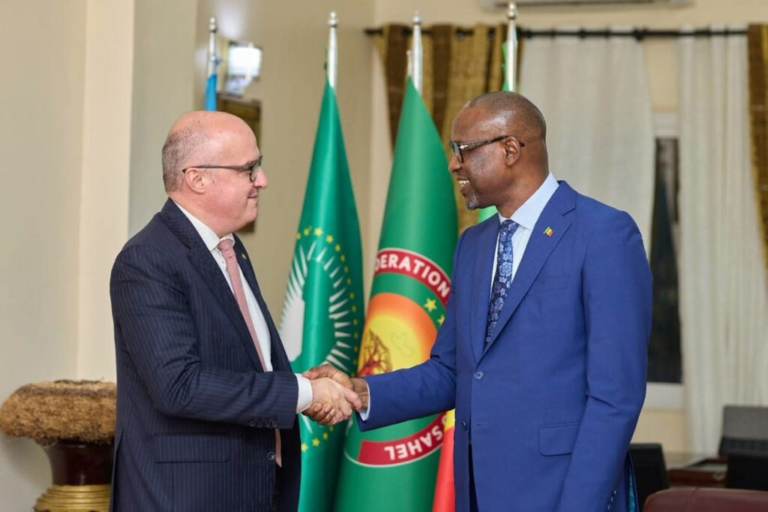
Switzerland has launched its 2026–2029 bilateral cooperation programme in Mali, earmarking approximately 87 million Swiss francs ($100 million) to support local governance, civil protection, and economic resilience across seven targeted regions.
Presented in Bamako following a meeting between Malian Foreign Minister Abdoulaye Diop and Swiss Ambassador Pietro Mona on Wednesday, September 16, 2026, the four-year strategy allocates roughly two-thirds of its budget to long-term development initiatives and one-third to immediate humanitarian assistance. The funding, subject to annual review by Switzerland’s Federal Council and Parliament, builds upon Bern’s continuous development presence in Mali dating back to 1977, adapting operational execution through flexible procedures, shortened project cycles, and remote monitoring to navigate regional security and access constraints.
Structured around two operational pillars, the cooperation framework prioritizes institutional transparency, community mediation, natural resource conflict mitigation, and support for displaced populations alongside victims of gender-based violence under its governance mandate. Simultaneously, its economic component targets climate-change adaptation, vocational training, access to microfinance, and agricultural value-chain expansion for youth and women across central, northern, and southern provinces, specifically Mopti, Bandiagara, Douentza, Timbuktu, Sikasso, Bougouni, and Koutiala. Implemented in partnership with local authorities, civil society groups, and UN agencies, the initiative also serves as a platform for ongoing political dialogue between the Alliance of Sahel States (AES) and European partners, reinforced by sports diplomacy engagements ahead of upcoming regional youth athletic events.