





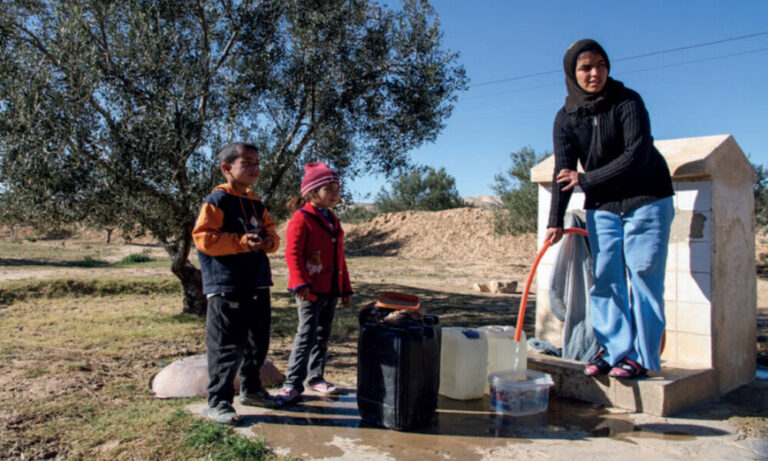
Tunisia is currently grappling with a profound drinking water crisis that leaves an estimated 300,000 citizens without a regular supply, according to recent data from regional non-governmental organizations.
While the coastal urban centers remain relatively stable, the crisis has become a daily reality for hundreds of thousands in the rural interior and outlying districts. These areas face a combination of disconnected public networks and prolonged service outages, creating a stark divide in how the fundamental right to water is realized across the country.
The National Water Distribution Company (SONEDE) has pointed to “technical and climatic constraints” as the primary drivers of the shortage. Years of persistent drought have led to a critical decline in dam levels, leaving the nation’s reservoirs at historic lows. However, independent observers and development NGOs argue that climate change is only part of the problem. They highlight a significant lack of investment in network maintenance, noting that aging infrastructure results in nearly 30% of distributed water being lost to leaks before it ever reaches a household tap.
The social and economic toll of this scarcity is mounting rapidly. Many families are now forced to purchase water from private cisterns at exorbitant prices, a necessity that is severely eroding the purchasing power of the most vulnerable populations. In agricultural regions, the lack of water has moved beyond a domestic issue to a systemic threat to livelihoods. Smallholder farmers, unable to sustain their crops or livestock, are increasingly abandoning their land, fueling a concerning trend of rural exodus toward already overcrowded cities.
In response to the growing emergency, the Tunisian government has prioritized a shift toward unconventional water sources, with a heavy emphasis on seawater desalination and the rehabilitation of existing pipelines. While several projects supported by international donors are currently in the works, observers warn that the pace of implementation is too slow to meet the immediate needs of the population. Experts suggest that without a rapid acceleration of governance reforms and a commitment to regional equity, the water shortage could become a significant catalyst for heightened social tension and instability in the coming years.
MK/AK/fss/abj/APA