



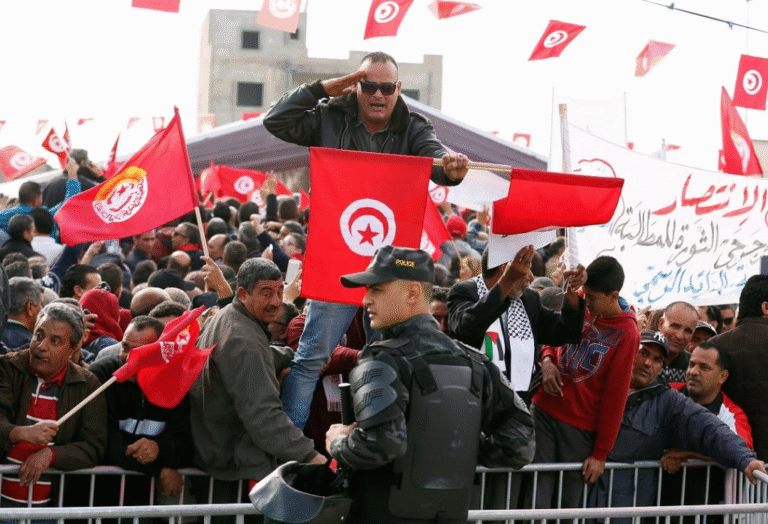
In a stern address at the Council of Ministers, Tunisian President Kais Saied strongly criticized what he described as a persistent pattern of institutional dysfunction across the country.
He specifically targeted recent power outages, water supply issues, and a lack of transparency in public services, blaming “organized groups” and a powerful “old machine” for undermining the state.
President Saied argued that frequent power outages, which were a major issue during the summer, cannot be explained by technical problems alone. He accused these “organized groups” of deliberate disruptions and mismanagement, which erode public trust in the government’s ability to fulfill its basic duties.
Similarly, he pointed to the drinking water crisis, asserting that network failures and supply interruptions were, in some cases, intentionally caused. These accusations have resonated deeply with citizens already struggling with water scarcity.
The president also criticized local governments for their slow response to emergencies and their overall inertia. He suggested that despite constitutional provisions for decentralization, many regions remain overly dependent on the capital, highlighting a long-standing issue of local governance.
Saied also condemned the waste of public resources, noting that many state-funded projects have failed to deliver tangible benefits to the population. His remarks echoed findings from the Court of Auditors, which has repeatedly documented mismanagement of public funds.
Concluding his address, the president insisted that the state must reclaim its role as an instrument for the people, free from the influence of powerful networks and special interest groups. He stated that these actors, motivated by personal gain, are actively creating crises in critical sectors like health, education, and transportation to serve their own agendas.
MK/ac/Sf/fss/abj/APA