





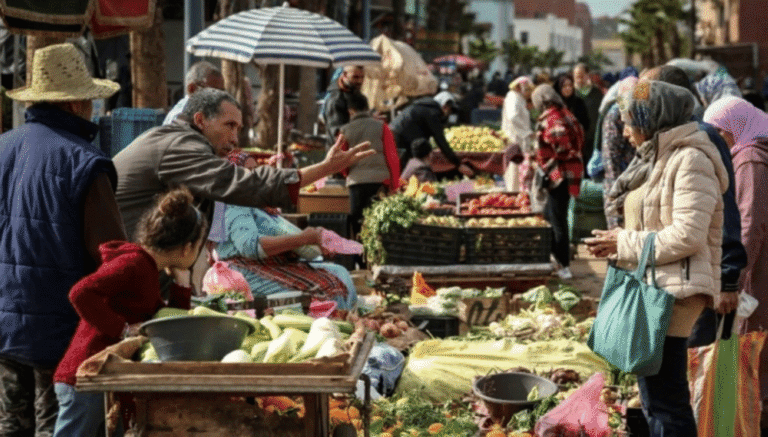
While Morocco’s overall inflation rate has slowed, the cost of everyday groceries continues to strain household budgets.
According to the High Commission for Planning (HCP), the annual inflation rate dropped to 0.3% in August, a slight decrease from 0.5% in July.
The consumer price index (CPI) reflects this overall trend, with food prices rising by 0.2% and non-food prices by 0.3%. This is a significant slowdown compared to the high inflation rates seen over the last two years.
However, the official statistics don’t tell the whole story. For many Moroccan families, the cost of essential goods like vegetables, cereals, oils, and dairy products continues to climb. This disconnect between the official inflation rate and people’s daily experience is a major concern.
Experts suggest the slowdown is a temporary trend rather than a lasting change. They point out that food makes up a large portion of Moroccan household spending, making families highly vulnerable to price changes. Even small price hikes have a big impact on family budgets and contribute to a feeling that inflation is much higher than reported.
As the new school year begins, a time when family finances are already stretched, the high cost of living remains a top concern. While Morocco’s overall inflation rate now sits below 1%, closer to that of other stable economies, the persistent pressure on food prices is a major challenge for the country’s economic and social policies.
MK/ac/fss/abj/APA