



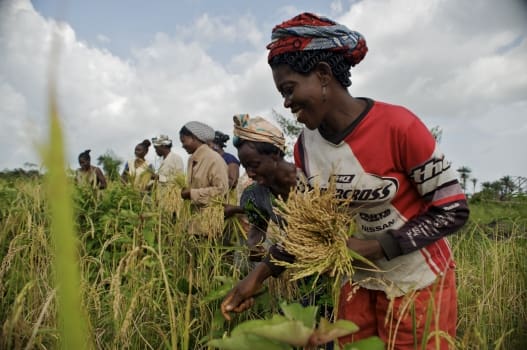
A recent study published in “People and Nature” has revealed that pastoralist communities in a Ugandan sub region contend with food shortages by adopting previously unused wild edible plants.
This comes as changing climate patterns create a mix of droughts and floods across the world especially in Africa, diminishing crop yields and livestock shortages. The study seen by APA on Wednesday comes on the heels of 2024 research on wild edible plants by local NGOs in Karamoja, a semiarid region in northern Uganda.
That earlier study found “that people had developed consumption of plants that they had not used before, according to Emiel De Meyer, a postdoctoral researcher at the State Natural History Museum.
Spurred by this discovery, De Meyer led a team of researchers across five agro-pastoralist communities in Karamoja, interviewing members of the local communities on their knowledge of edible wild plants.
Through a mix of qualitative and statistical methods, the researchers also probed the reasons behind the adoption of particular plants and how this knowledge was transmitted.
In the five villages covered in the study, the authors recorded 27 plant species previously unused as food and now eaten as leafy vegetables. Of these, 20 were reported to be indigenous to Uganda. Although all these plants were mostly harvested during the wet season, at least three were said to be also available during the dry season.
Strikingly, the study found that these plants had been adopted for food mostly through trial and error, during seasons of acute hunger — or akoro, as it is known in the Ngakarimojong language.
“It shows that the surrounding vegetation holds unexplored uses and constitutes a reservoir of resilience,” De Meyer said of the study’s findings. “Local plant knowledge is usually treated as inherited and fixed. Here was an example of such knowledge being generated in the present.”
Edible plants found naturally in the wild comprise various food categories from fleshy fruits like berries to roots and leafy vegetables. These plants contain relatively high concentrations of phytochemicals, including polyphenols and carotenoids, which serve as defense against a slew of diseases and promote human well-being.
The Food and Agriculture Organization estimates that about 1 billion people worldwide depend on wild edible species for food security and livelihood.
MG/abj/APA