





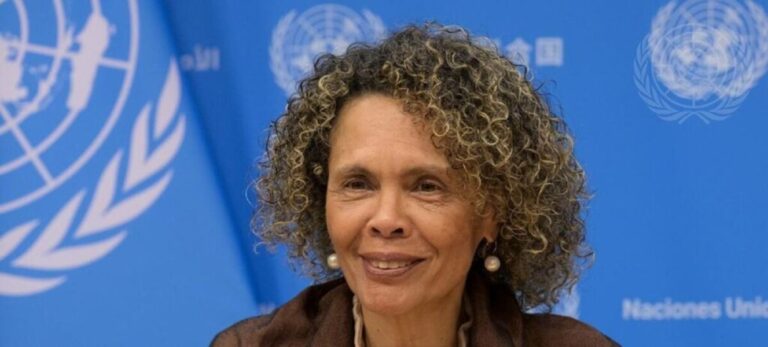
Cristina Duarte, the United Nations Special Adviser on Africa, has identified a necessary shift in mindset as the primary challenge—and opportunity—for the continent’s development.
Speaking with UN News following the 2025 Academic Conference on Africa, Duarte emphasized that valuing indigenous African knowledge and internal resources is the key to repositioning the continent within the changing global world order.
The conference, which gathered academics and political leaders at UN Headquarters, highlighted three critical lessons for the continent: Mindset and Identity: Duarte argues that recognizing African knowledge as the foundation for development is the first step. “Everything else will follow,” she stated. State-Building: Despite decades of independence, the persistent challenges of nation-building and creating resilient states remain a hurdle. Financial Resource Management: There is an urgent need to pivot from external dependence to the efficient management of internal wealth.
Duarte challenged the narrative surrounding African debt, suggesting it is a result of poor management rather than a lack of resources. She pointed to a staggering reality: Africa loses approximately $1.4 billion per day—totaling nearly $500 billion annually—due to capital flight and structural inefficiencies.
This annual loss far exceeds the amount received in official development assistance. Duarte advocates for a development model that mobilizes internal resources without increasing the tax burden on citizens.
The UN Special Adviser proposed a significant change in how financial flows are classified: Diaspora Remittances: Estimated at over $100 billion per year, Duarte argues these should be reclassified as “domestic financing” rather than external flows and integrated into national development strategies.
The Youth Demographic: By 2050, four out of five young people in the world will be African. Currently, 85% of African youth work in the informal sector. Duarte called for massive investments in science, technology, and productive sectors to convert this demographic asset into sustainable jobs.
Despite governance hurdles, Duarte remains optimistic. She suggests that African nations should rethink democratic models by drawing on traditional African values of consensus and participation.
To bridge the gap between theory and practice, she proposed a “knowledge-sharing agreement” between African policymakers and academics. According to Duarte, Africa must now draw upon its own intellectual and cultural resources to define its vision for the next 25 to 50 years.
RNK/ac/fss/abj/APA