





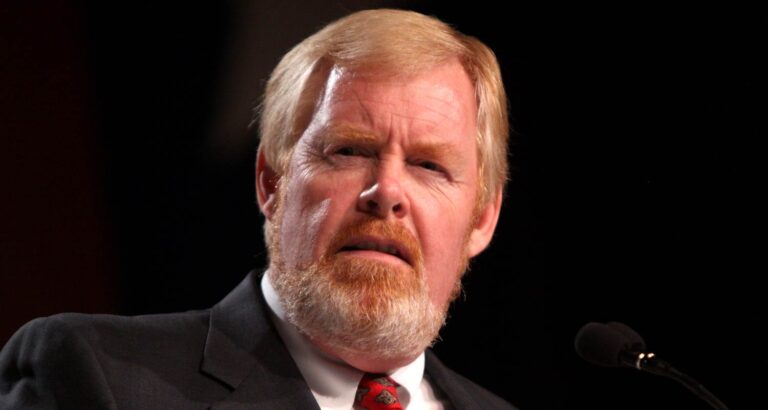
The United States ambassador to South Africa, Brent Bozell III has renewed Washington’s criticism of President Cyril Ramaphosa, accusing the South African leader of failing to condemn what the Trump administration regards as incitement to violence against white citizens.
Speaking to Fox News Digital, Bozell said Pretoria had ignored repeated US demands to denounce the controversial slogan “Kill the Boer”, which has become a focal point in an increasingly bitter dispute between Washington and Pretoria. Boers are white South Africans of Dutch or Huguenot descent.
“You’ve got a president of South Africa who refuses to condemn an incitement to kill,” Bozell said, arguing that Ramaphosa could publicly reject the chant regardless of court rulings that have protected its use.
The “Kill the Boer” chant is a South African struggle song that originated during the anti-apartheid era.
Critics, including the civil rights group AfriForum and many Afrikaner organisations, contend that the chant amounts to hate speech and can be interpreted as incitement to violence against white farmers and Afrikaners.
The song regained prominence in the post-apartheid era through its use by political figures including former African National Congress Youth League leader Julius Malema who now heads the opposition Economic Freedom Fighters.
Its legal status has been the subject of lengthy court battles. In 2010, a South African court ruled that the song constituted hate speech.
However, subsequent judgments took a different view. In 2022, the Equality Court found that the song, when sung in a political context, did not amount to hate speech, holding that a reasonable observer would understand it as a historic struggle song rather than a literal call for violence.
The Supreme Court of Appeal upheld that view in 2024, and the Constitutional Court declined to hear a further appeal in 2025, effectively leaving those rulings in place.
Bozell’s comments came days after he was summoned by South Africa’s Department of International Relations and Cooperation and reprimanded for what officials described as “undiplomatic conduct”.
According to the ambassador, it was the third diplomatic démarche he has received since taking up his post at the beginning of the year.
He said three of the Trump administration’s key concerns remained unaddressed by South Africa, namely the continued use of the chant, alleged race-based barriers affecting investment and mining, and what he described as insufficient government support for the Afrikaner farming community.
The remarks mark the latest escalation in a dispute that has strained relations between the two countries since President Donald Trump revived claims that South Africa’s white minority faces systematic persecution, allegations Pretoria has repeatedly rejected.
The so-called “white genocide” narrative has become a recurring point of contention between the Trump administration and the South African government.
Trump and several senior US officials have alleged that white farmers are being targeted by violent crime, discriminatory policies and threats of land expropriation while South African authorities maintain that crime affects all communities and that no evidence supports claims of genocide.
The disagreement became highly publicised following a tense meeting between Trump and Ramaphosa in Washington in May 2025 where the US president pressed his counterpart on farm murders, land reform and affirmative-action policies aimed at addressing inequalities created under apartheid.
US officials have also criticised South Africa’s Broad-Based Black Economic Empowerment policies, arguing that they discriminate on racial grounds.
Pretoria, however, maintains that such measures are necessary to address the legacy of apartheid and broaden economic participation.
Another flashpoint has been South Africa’s land reform programme.
While the government has sought to accelerate redistribution of land to historically disadvantaged communities, US officials have repeatedly expressed concern that the process could undermine property rights.
South African authorities insist that reforms are being implemented within constitutional and legal frameworks.
The dispute has extended beyond domestic policy.
Washington has increasingly questioned Pretoria’s foreign policy positions, including its relationships with countries such as Russia, China, Iran and Cuba.
In his latest remarks, Bozell criticised South Africa’s engagement with those states and urged Pretoria to adopt what he described as a more genuinely non-aligned stance.
JN/APA