



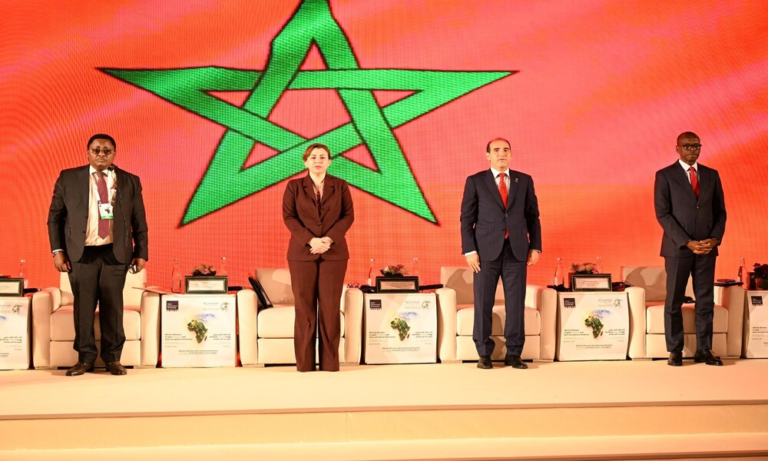
A so-called African Alliance of Open Integrity and Anti-Corruption Institutions has been launched in Marrakech at the initiative of Morocco’s National Authority for Probity, Prevention and Combating of Corruption (INPPLC), in partnership with the Open Government Partnership (OGP).
The alliance was launched at the closing ceremony of a meeting of heads of African integrity and anti-corruption bodies and commissions.
The new body, whose permanent headquarters and secretariat will be based in Morocco at the INPPLC, aims to make the prevention of and fight against corruption more effective through the exchange of experience and best practices, capacity building and the use of institutional openness tools, notably transparency, open data and participation.
The alliance also aims to encourage joint or integrated initiatives and commitments in areas of shared interest, to support capacity building and the development of African knowledge and expertise in fields related to its work, and to strengthen cooperation with relevant regional and international partners, notably the secretariat of the Open Government Partnership (OGP) initiative.
INPPLC President Mohamed Benalilou said the alliance marks a new stage in continental cooperation and should help turn African experiences into concrete solutions to corruption.
He stressed that the initiative rests on the principle of complementarity, not competition, with other associations and bodies working against corruption. He said no institution, association or state can fight the phenomenon alone, given its complexity and many dimensions, hence the need for joint, coordinated action.
Benalilou specified that the Charter is not an international convention but a declaratory pact of intent aimed at establishing a framework for cooperation based on the principles of open government, from the standpoint of open institutions.
He stressed respect for each country’s legal, constitutional, organizational, geographic, cultural and environmental specificities, while preserving the independence of institutions and their regulatory frameworks.
The adoption of periodic work programs makes it possible to turn these priorities into joint initiatives that draw on the expertise accumulated by African institutions, within a framework that respects the independence and competences of each institution.
The alliance’s ten founding institutions come from nine African countries: Gabon, South Africa, Mauritania, the Union of the Comoros, Madagascar, the Central African Republic, the Republic of the Congo, Ivory Coast and Morocco.
AK/Sf/lb/APA