



Presented as a bulwark against foreign interference, Algeria’s legal framework for personal data protection may, in reality, hinder international cooperation efforts.
Speaking before the National People’s Assembly on Monday, Minister of Justice Lotfi Boudjemaâ defended a draft law aimed at strengthening personal data protection guarantees.
Officially, the goal is to enhance citizens’ rights. Yet beyond the stated intentions, questions remain about the genuine independence of the proposed mechanisms and their alignment with international standards.
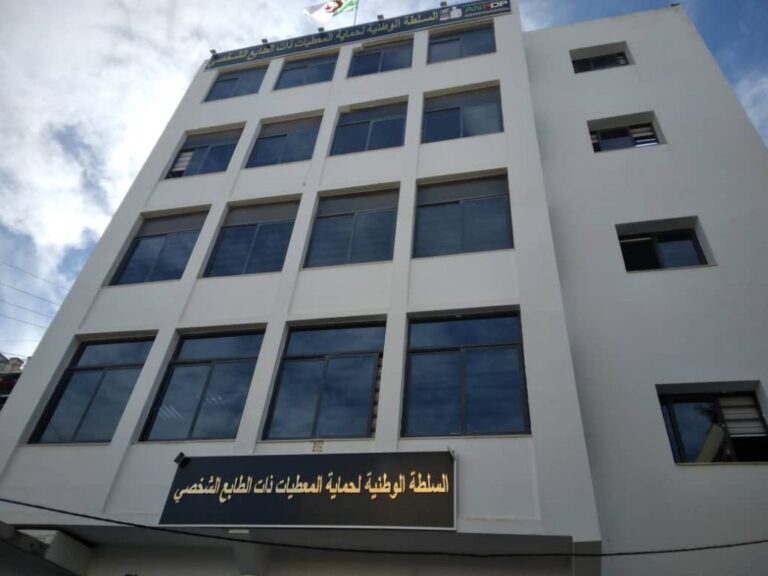
The minister cited Law No. 18-07 and the role of the National Authority for the Protection of Personal Data (ANPDP), describing it as “independent.”
However, its direct oversight by the presidency raises concerns: with no parliamentary or judicial supervision, its autonomy appears largely theoretical. In such a context, it is difficult to envision the authority handling complaints involving sensitive institutions with true impartiality, particularly in a country where public transparency remains limited.
Since its establishment in 2022, the ANPDP has reportedly implemented control mechanisms and received complaints via a digital platform, according to the minister. Yet no public data has been released to assess its impact, and opacity continues to surround its actual resources—whether human, technical, or financial—in a country often criticised by NGOs for privacy violations, especially in the security sector.
The draft law introduces a requirement for all public and private entities to appoint a Data Protection Officer.
While promising on paper, the measure’s effectiveness will hinge on the training, protection, and independence of these officers—conditions rarely met in administrative environments reluctant to embrace accountability.
The legislation also underscores the importance of consent, including for minors’ data.
However, implementation remains unclear in a context where most citizens are still unaware of their digital rights.
The minister emphasised the public’s ability to file complaints with the ANPDP in the event of abuse, yet failed to provide concrete examples of sanctions issued to date.
Data transfers beyond Algeria’s borders are also strictly regulated: any cross-border transmission requires prior authorisation from the ANPDP, except in judicial cases. This hardline stance is framed as a guarantee of national sovereignty—but it could also impede cooperation with international partners such as Eurojust, with which Algeria paradoxically seeks closer ties. The tension between sovereignty and interoperability runs through much of the official discourse.
Ultimately, the draft law appears more focused on achieving formal alignment with international standards than on a genuine commitment to transparency and institutional accountability. Until there is clear provision for external oversight, accessible legal recourse, and regular public reporting by the ANPDP, the promised modernisation is likely to remain largely symbolic.
MK/te/sf/lb/as/APA