



The surveying of industrial land, the financing of innovative projects originating from universities,
climate adaptation, and sports infrastructure are the focus as the Algerian government intends to remove several structural constraints to stimulate investment and diversify the national economy.
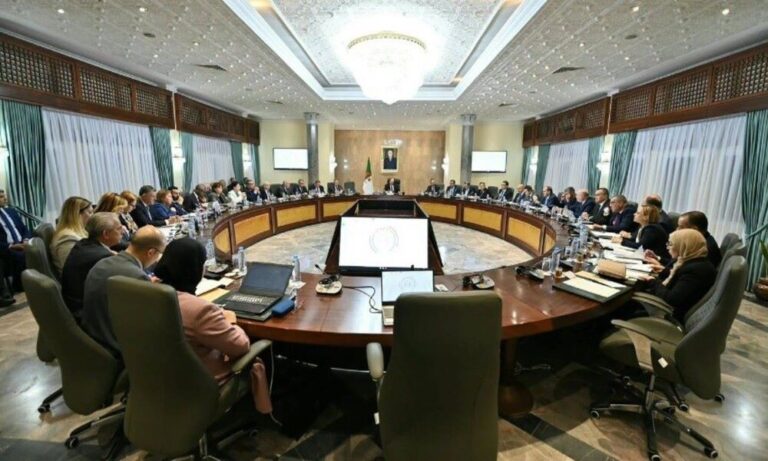
Meeting on Thursday under the chairmanship of Prime Minister Sifi Ghrieb, the Algerian government reviewed the progress of the survey of economic land – an initiative aligned with the directives of the president.
This operation aims to create a precise map of land designated for industrial and economic investment, while accelerating the digitisation of procedures and centralising them through a
one-stop-shop system.
This effort follows decisions made during interministerial council meetings held on September 10 and 13, which included the participation of provincial governors (‘walis’).
The objective is to better identify available land, while also distinguishing between new investment projects and expansion initiatives.
According to a government statement, this approach is intended to provide more effective support to economic operators and remove the administrative obstacles they face.
Beyond the inventory itself, the core issue is ensuring a smooth investment environment. The availability of land is a critical prerequisite for realising industrial projects, attracting capital, and strengthening productive capacity.
However, the question remains as to how this survey will be implemented in practice: identifying
available land must be paired with faster allocation procedures and greater clarity for investors.
Another matter examined by the executive branch concerns the financing of university-based innovation. The government reviewed mechanisms designed to support students, graduates, and doctoral candidates who are developing projects with the potential for industrialization and
commercialisation.
Nearly 1,000 innovative projects have reportedly already received funding within this ecosystem. This direction reflects a desire to evolve the role of the university, moving beyond its traditional
function of education to position it as a driver of value creation and economic diversification. The real challenge, however, remains the transition from research to the marketplace: transforming prototypes into products, ideas into viable businesses, and innovations into job-creating activities.
The meeting also included a presentation of the National Climate Change Adaptation Plan, which looks ahead to 2035. Building upon the Nationally Determined Contribution submitted to the United Nations in June, this document establishes priorities aimed at strengthening the country’s resilience to the impacts of climate change.
MK/AK/Sf/fss/as/APA