



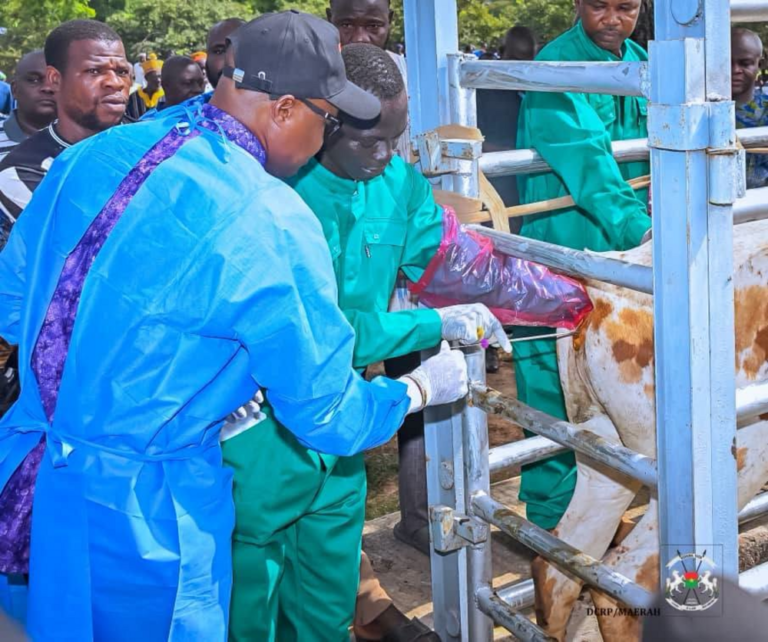
Burkina Faso aims to have 100,000 cows artificially inseminated by 2026, compared with an annual average of 3,000 over the previous decade.
The country has reduced the cost of this technique by 90% as part of its strategy to develop the livestock sector and boost dairy production.
In 2025, more than 12,200 cows were artificially inseminated, according to the Ministry of Agriculture, Water, Animal Resources, and Fisheries.
The cost of bovine insemination fell from 50,000 to 5,000 CFA francs per cow in 2024. This reduction is intended to make this reproductive technique more accessible to livestock farmers.
Artificial insemination helps disseminate the genetic traits of selected breeding stock, particularly to improve milk production. Its effectiveness, however, depends on the animals’ diet, health
monitoring, and rearing conditions.
The country has also reduced the cost of inseminating sows from 45,000 to 5,000 CFA francs. A total of 458 sows have benefited from this technique.
At the same time, Burkina Faso has imported 710 cows from Brazil to boost its dairy production capacity.
The authorities are also focusing on developing local milk collection and processing, particularly through the state-owned company Faso Kosam.
Animal feed production is also among the key areas identified, with Faso Guulgo, another state-owned company.
These initiatives are part of the 2026-2028 Agro-Pastoral, Water Resources, and Fisheries Initiative. The government aims to improve livestock productivity and reduce dependence on dairy imports.
However, the goal of 100,000 inseminations poses a major challenge, one that will require sufficient technical capacity and rigorous monitoring of pregnancies, births, and calf survival.
HO/te/fss/as/APA