



This comes amid persistent diplomatic rupture between Kinshasa and Kigali, just days before the election scheduled for November 15-16, 2026, in Phnom Penh, Cambodia.
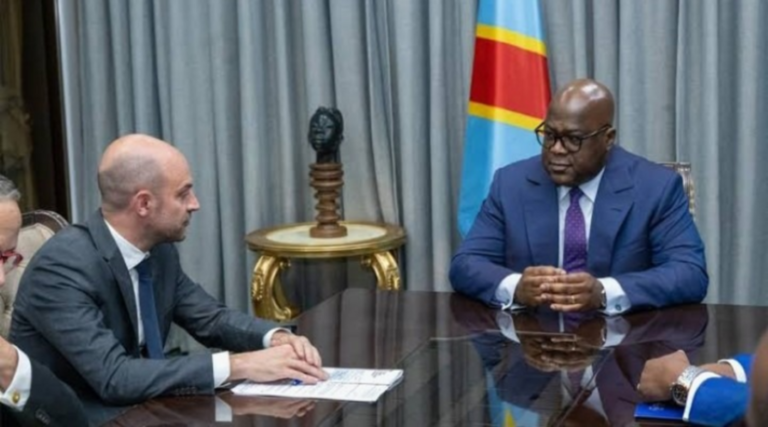
According to reports by ‘Jeune Afrique’, relayed by Agence France-Presse (AFP) on November 7, Congolese President Felix Tshisekedi raised this possibility during a meeting with French Foreign Minister Jean-Noel Barrot in Kinshasa on October 2.
This threat arises against a backdrop of deteriorating relations between the DRC and Rwanda; Kinshasa accusing Kigali of backing the AFC/M23 armed group, which is active in the eastern part of the DRC.
In opposition to the incumbent Secretary-General – who has held the post since 2019 – the DRC is backing Juliana Amato Lumumba, a former Congolese Minister of Culture and daughter of the late Prime Minister Patrice Emery Lumumba.
Four individuals are in the running for the organisation’s top post: Louise Mushikiwabo (Rwanda), Juliana Amato Lumumba (DRC), Coumba Ba (Mauritania), and Dacian Cioloș (Romania).
Beyond the competing candidacies, Kinshasa is also challenging the voting procedures – specifically the use of a simple majority in the absence of a consensus among member states.
January 2019. She was reappointed for a second term in 2022, during the summit in Djerba, Tunisia.
The election in Phnom Penh thus shapes up to be a delicate diplomatic moment for the OIF, which is contending with the repercussions of geopolitical tensions among some of its members.
DM/te/Sf/fss/as/APA