



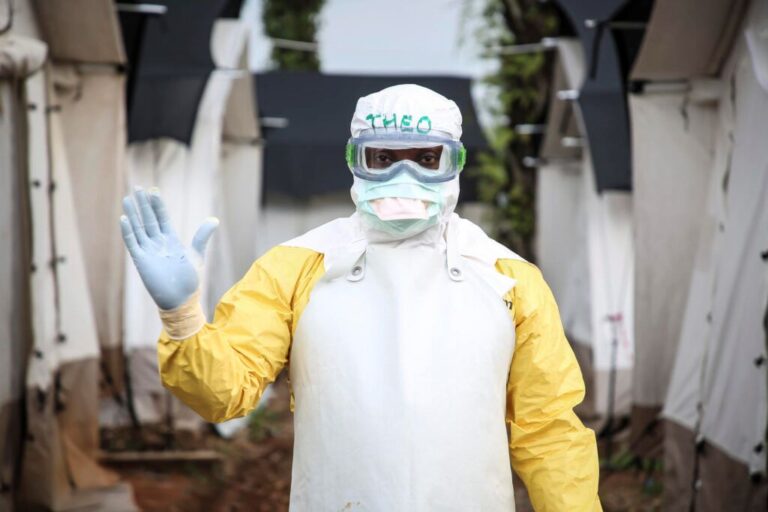
The number of confirmed Ebola cases in the Democratic Republic of Congo (DRC) has surpassed 8,000, with health authorities warning that the outbreak remains difficult to contain amid a shortage of health workers, continued community deaths and the disease’s spread into new areas.
Latest figures from the DRC health ministry showed 8,067 confirmed cases and 3,901 deaths as of 26 September across 63 health zones in seven of the country’s 26 provinces.
The outbreak, declared on 15 May and caused by the Bundibugyo species of Ebola virus, has become the largest and deadliest Ebola epidemic in the country’s history, surpassing the 2018-2020 outbreak.
It is now second only to the 2014-2016 West African epidemic, which infected more than 28,600 people and claimed over 11,000 lives across Guinea, Liberia and Sierra Leone.
Health officials say efforts to bring the outbreak under control are being undermined by growing pressure on frontline health systems.
The World Health Organisation (WHO) last week warned that the DRC was running short of health workers needed to sustain the response.
The shortage has been compounded by strikes linked to delayed or unpaid salaries, disrupting operations at a critical stage of the epidemic.
According to the Africa Centres for Disease Control and Prevention (Africa CDC), 50 health workers have died since the outbreak began, further weakening response capacity.
While some areas, including Ituri and Haut-Uele provinces, have reported declines in confirmed infections, the disease continues to spread in other parts of the country, particularly North Kivu province, expanding the outbreak’s geographical footprint.
Children under the age of five remain among the most vulnerable.
JN/APA