



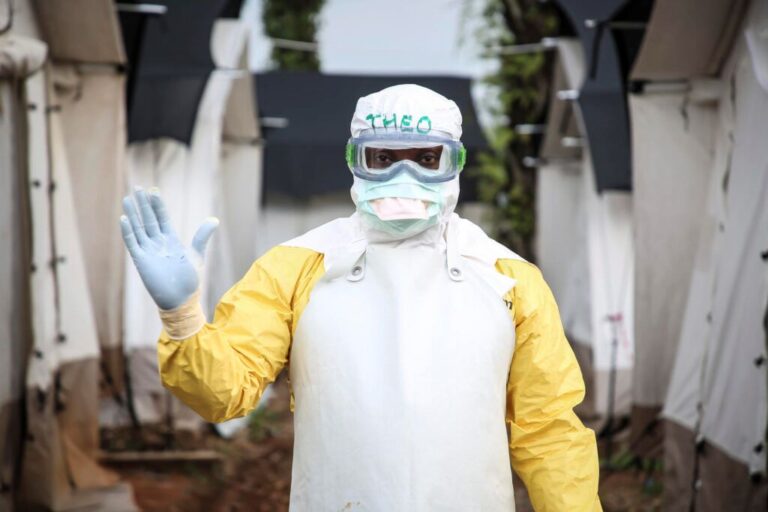
The World Health Organisation says efforts to contain an Ebola outbreak in the Democratic Republic of Congo (DRC) are showing “encouraging signs” amid warnings by aid workers that the “progress” actually masks a shift of the epicentre for the disease.
WHO director general Tedros Adhanom Ghebreyesus said on Wednesday that transmission was declining in the most affected parts of Ituri province but warned the outbreak was “far from over” due to population mobility
“We are now starting to see encouraging signs that we are gaining ground,” Tedros said.
The Central African country has reported more than 7,200 confirmed Ebola cases since the outbreak started in Ituri province in May.
The second deadliest on record behind one in West Africa that lasted from 2014 to 2016, the DRC outbreak has since spread to seven provinces.
Meanwhile, medical charity Doctors Without Borders (MSF) on Wednesday warned that the race to contain the Ebola outbreak is far from over.
MSF emergency coordinator in the DRC, Anthony Kergosien noted that while some indicators may suggest the outbreak is easing, the organisation is “observing a worrying trend: cases are emerging and spreading into new, underprepared areas while basic response measures are still not in place in the original hotspots, making containment efforts increasingly challenging.”
“Assuming the outbreak is under control because some Ebola Treatment Centres are admitting fewer patients would be a mistake,” Kergosien said in a statement on Wednesday.
He noted that while incidents of the disease are slowing down in Ituri, the original epicentre, the number of new cases nationally has not fallen.
“The outbreak is not shrinking, it is moving: South Ubangi has become the seventh affected province, while North Kivu now accounts for nearly half of all newly confirmed cases, with test positivity rising sharply in recent days.”
While undetected chains of transmission are already taking hold in the main operational hubs, the spread of the outbreak into new areas with even weaker preparedness and response capacities poses a serious risk.”
Kergosien said MSF has deployed teams to the affected regions to support early case detection, patient observation and treatment, infection prevention and control measures, contact tracing, surveillance and community engagement.
JN/APA