



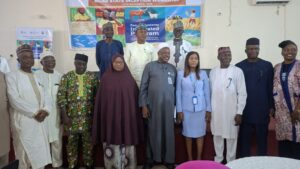
The Food and Agriculture Organisation (FAO) says it is investing 7.1 million dollars in sustainable food systems transformation in two Nigerian states of Niger and Kebbi through the Global Environment Facility (GEF-8) Food Systems Integrated Programme (FSIP).
The Project Manager for GEEF Funded Project Food System Integrated Programme, Nigeria, Dr Nifesimi Ogunkua, told the programme’s workshop in Minna, Niger State on Wednesday that the five-year programme was designed to transform agricultural production systems through sustainable practices in crop production, livestock and aquaculture.
Ogunkua said that Niger and Kebbi were selected based on evidence of environmental degradation associated with agricultural production, particularly rice farming, livestock development and fisheries.
According to her, the programme will address challenges such as unsustainable farming practices, declining soil fertility, land degradation, climate change and limited access to finance among smallholder farmers.
She explained that more than two million dollars had been allocated to support smallholder farmers in the two states through grants and revolving grants to enable them to adopt sustainable agricultural practices.
She said that the programme targeted about 37,000 hectares of agricultural land for improved and integrated landscape management, restoration of 13,000 hectares of land cover and mitigation of approximately 2.5 million tonnes of carbon dioxide equivalent.
The FAO project manager added that the programme was expected to benefit 100,000 smallholder farmers and small and medium-sized enterprises across the two states, with women accounting for at least 50 per cent of the beneficiaries.
She said that the interventions would be implemented in nine local government areas and 11 landscapes in Niger state, with relevant ministries, departments and agencies, farmer organisations, private sector operators, women and youth groups involved.
Ogunkua urged stakeholders to take ownership of the programme, stressing that its success would depend on effective collaboration and commitment to sustaining the interventions beyond the five-year implementation period.
Earlier, the Niger Commissioner for Agriculture, Alhaji Isah Sidi-Rijau, said the programme aligned with the agricultural transformation agenda of Governor Umaru Bago administration.
He said that Niger was endowed with vast arable land, water resources and favourable conditions for agricultural production but needed sustainable practices to address climate change and environmental degradation.
The commissioner assured FAO and GEF of the commitment of the state government to provide necessary institutional support for the successful implementation of the programme.
GIK/APA