



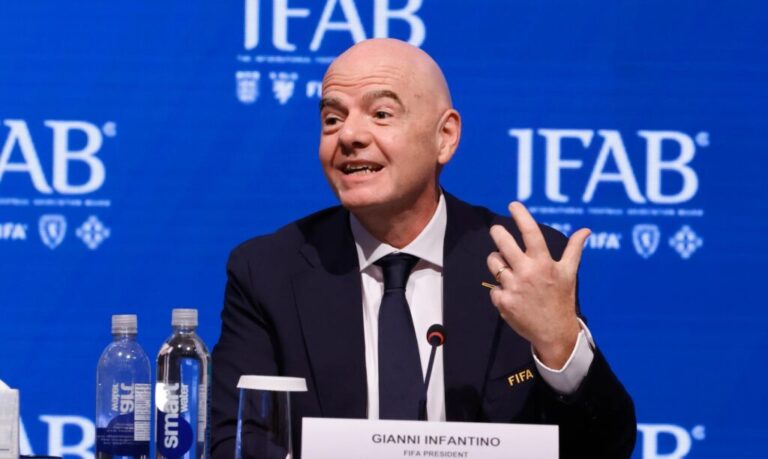
FIFA has officially announced a comprehensive tightening of its disciplinary framework alongside a record-breaking financial package for the 2026 World Cup during a high-level meeting in Vancouver.
Convening on the eve of the 76th FIFA Congress, the FIFA Council approved several critical regulatory adjustments aimed at improving on-field conduct and maintaining the integrity of the expanded 48-team tournament. Under the new rules, referees have been granted the discretion to issue red cards to players who leave the field of play to challenge officiating decisions or those who utilize protest gestures, such as covering their mouths, to shield their conversations with officials. Furthermore, the governing body has clarified that any team found responsible for the permanent abandonment of a match may be subject to a forfeit.
The tournament’s yellow card system has also been redesigned to accommodate the new 48-team format, with cautions now scheduled to be reset at the conclusion of the group stage and again after the quarter-finals. This adjustment is intended to ensure that the final stages of the competition feature the best players by preventing suspensions for cumulative minor infractions. These shifts in the Laws of the Game were developed in coordination with the International Football Association Board and reflect a broader institutional effort to streamline the competition’s administrative and competitive fairness.
Financially, the 2026 World Cup is set to be the most lucrative in history, with FIFA allocating a total of 871 million dollars in prize money, representing a 15% increase from previous cycles. This funding includes a 2.5 million dollar preparation fund and a 10 million dollar qualification bonus for each participating nation, with additional resources earmarked for logistical expenses. FIFA President Gianni Infantino highlighted the organization’s historic financial strength, noting that these revenues are being directly reinvested into global football development. As the tournament prepares to kick off across the United States, Mexico, and Canada on June 11, qualified nations—including Senegal and Morocco—will be operating under these heightened standards and enhanced financial incentives.
SS/te/Sf/lb/abj/APA