



Guinea is codifying a new strategic framework for its domestic governance and foreign relations anchored in national sovereignty and non-alignment amid intensifying global power rivalries.
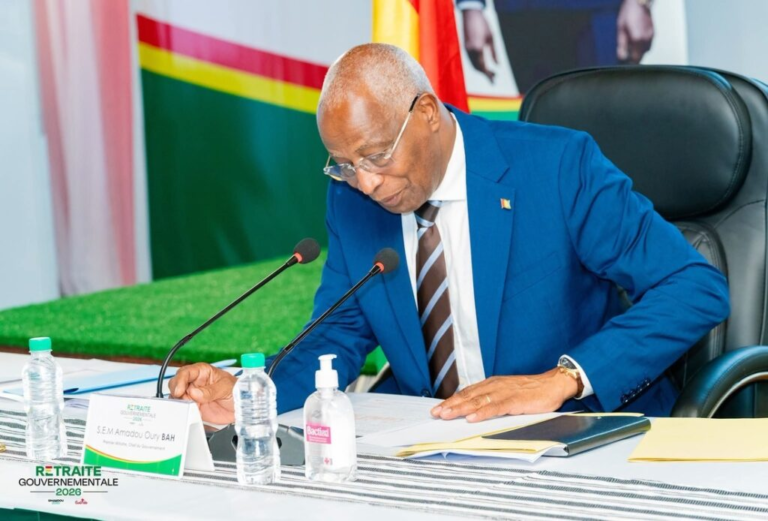
Unveiled by Prime Minister Amadou Oury Bah at the conclusion of the 2026 government retreat in Forécariah, the “Mamadi Doumbouya Doctrine: Strategic Neutrality for Lasting Stability” establishes a guiding blueprint for state action.
Conceived as a central point of reference for public policy, the doctrine prioritizes national interests, diplomatic independence, and the strategic mobilization of domestic resources to drive structural economic transformation. On the international stage, it is designed to enable Conakry to cultivate balanced partnerships across the globe without being drawn into geopolitical competition among major powers. In his closing address, Bah rooted the approach in Guinea’s historical legacy, invoking the distinct traditions of the country’s four natural regions—Upper Guinea, Fouta Djallon, Lower Guinea, and Forest Guinea—whose unity underpinned the nation’s historic assertion of independence in 1958.
Beyond foreign policy, the doctrine introduces strict accountability mechanisms into economic and administrative management. Bah announced that every ministerial department will undergo an audit before the end of 2026 to identify bottlenecks stalling public projects. Beginning in 2027, budget allocations will be directly linked to designated officials and measurable performance targets. This framework will be reinforced by formal mission letters issued to ministries early next year, with execution monitored jointly by the General Secretariat of the Government and the Prime Minister’s Office, while Bah pledged his personal intervention to clear persistent administrative roadblocks.
This push for tighter institutional discipline coincides with a pivotal milestone in Guinea’s economic reform agenda. The prime minister welcomed the International Monetary Fund (IMF) Executive Board’s approval on November 23 of Guinea’s 2026–2029 economic and financial program, attributing the endorsement to sustained government reforms and technical teamwork while emphasizing that macroeconomic gains must translate into tangible improvements in citizens’ daily living standards. With the ambitious Simandou 2040 program serving as its primary horizon for development, the new doctrine places political and economic sovereignty at the core of Conakry’s strategy—challenging the administration to convert Guinea’s vast natural wealth into durable prosperity while safeguarding its freedom of action in a polarized world.
TE/Sf/lb/abj/APA