





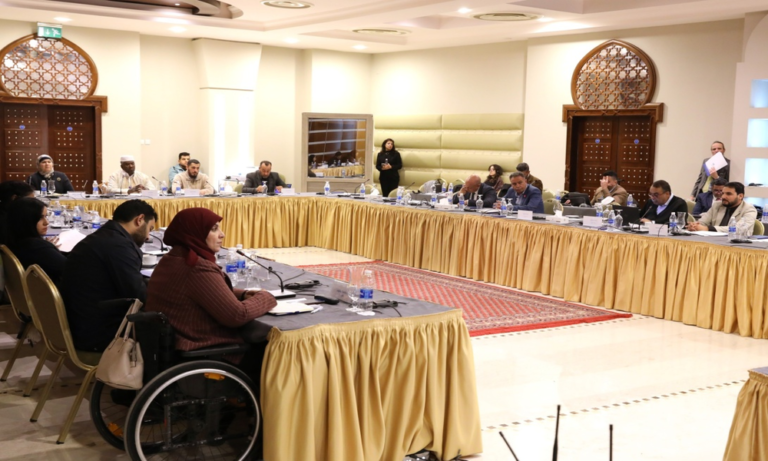
The United Nations Support Mission in Libya (UNSMIL) successfully resumed in-person sessions for the governance and security components of the structured dialogue in Tripoli on Sunday, February 1, 2026.
This four-day series of meetings represents a critical phase in the UN-led roadmap, aiming to bridge the country’s political divide by drafting practical recommendations for national stability. While the process is framed as “Libyan-led and Libyan-owned,” it continues to navigate a complex landscape of institutional fragmentation and competing centers of power.
The security track is building on a foundation established in mid-January, where participants reached an initial consensus on safeguarding the electoral process. Current discussions are focused on preventing the interference of armed groups, improving coordination between the Ministry of the Interior and the High National Electoral Commission, and establishing a unified code of conduct for all security actors. These measures are designed to increase public trust and ensure that future election results are respected by all parties.
Simultaneously, the governance track is addressing five core pillars: the pre-electoral political agreement, the mandate of a unified executive branch, electoral integrity, the future political system, and the balance of power between central and local authorities. This group, which includes significant representation from women (38%) and youth, is working toward defining a cohesive national vision.
The structured dialogue also integrates economy and human rights components to ensure a holistic approach to state-building. Recent sessions in the economy track emphasized the urgency of a unified national budget to address liquidity shortages and reform oil-revenue management. Despite the technical progress across these tracks, participants have expressed skepticism regarding the transition from recommendations to reality. The mission remains focused on creating the necessary legal and institutional frameworks to allow Libya to move beyond its long-standing transition period and toward permanent governance.
MK/AK/Sf/fss/abj/APA