





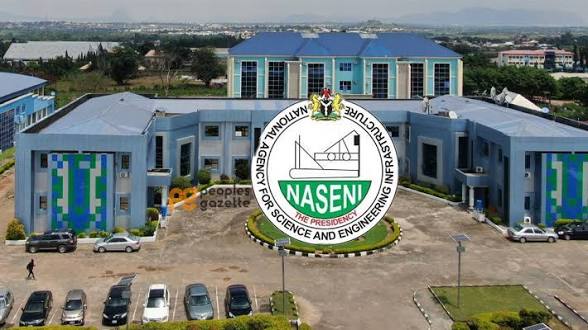
The Executive Vice Chairman of Nigeria’s National Agency for Science and Engineering Infrastructure (NASENI), Mr. Khalil Halilu, says the agency is moving to commercialise locally developed technologies, including solar irrigation systems, electric vehicles, CNG solutions and medical diagnostics.
According to the statement by NASENI on Friday in Lagos, Halilu stated that the agency’s three-year transformation was focused on converting Nigerian research and engineering ideas into products, factories, businesses and jobs.
He said that NASENI had developed and introduced over 40 products across renewable energy, mobility, agriculture, healthcare, information technology, clean cooking and education.
Halilu said that the agency was now building the industrial infrastructure and partnerships required to take such technologies beyond development and testing into sustained production and market adoption.
“Nigeria has capable engineers, researchers and innovators. What has often been missing is a connected system that can identify promising ideas, develop them, finance them, manufacture them and take them to the market,” he said.
The executive vice chairman said that NASENI had established systems connecting talent discovery, research funding, product development, incubation, financing, manufacturing and market access.
According to him, the approach intends to prevent Nigerian innovations from remaining as prototypes, without a clear pathway to commercial production.
He disclosed that NASENI’s Research Commercialisation Grant Programme awarded N229 million to 14 researchers in 2025 for projects in agriculture, clean energy, healthcare, mobility and digital security.
Halilu said the agency was also implementing DELTA-2, a Nigeria-Czech Republic programme supporting applied research, experimental development and technology transfer.
He said that NASENI HoldCo was being positioned to commercialise market-ready technologies, while the NASENI Showroom would provide a platform for investors and procurement institutions to access locally developed products.
“A competition can discover an inventor, but that inventor still needs product-development support, finance, manufacturing capacity and access to customers.
“We are building these components as one-connected system rather than as isolated programmes,” Halilu said.
He said that the agency’s manufacturing drive was particularly evident in renewable energy, where it was developing the 40-hectare Solar Industrial Park in Gora, Nasarawa State in northern Nigeria.
According to him, the park is being developed as an integrated platform for solar research, manufacturing, testing and deployment.
He said that NASENI DevFrontier was advancing local production of solar streetlights, while NASRacks was being established to manufacture solar mounting structures.
According to him, the agency is also working with local and international partners to develop domestic capacity for photovoltaic modules, inverters, batteries and other solar components.
He said that the objective was to increase Nigeria’s participation in the solar manufacturing value chain, instead of depending mainly on imported systems.
In agriculture, Halilu said that NASENI was deploying solar powered irrigation technologies to enable farmers to produce throughout the year, while reducing dependence on petrol and diesel pumps.
He said that the Irrigate Nigeria Project was designed to reduce production costs and improve food security through locally adapted irrigation technology.
GIK/APA