



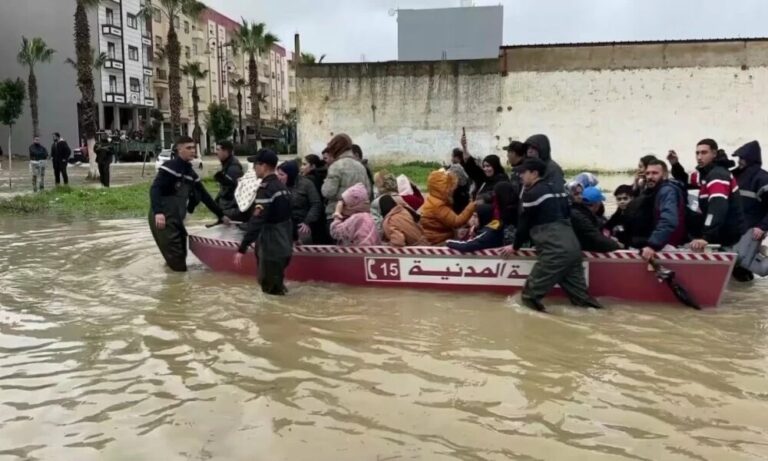
Acting on instructions from King Mohammed VI, Morocco has deployed extensive human and logistical resources—including the intervention of the Royal Armed Forces (FAR)—to assist and support communities affected by flooding and severe weather hitting several regions of the kingdom.
Meeting on Friday at the Ministry of the Interior in Rabat, the National Monitoring Committee tasked with managing and tracking flood-related events welcomed the king’s directives for the immediate deployment of the FAR, alongside significant human and logistical means to aid populations in affected areas, according to official sources.
Several regions, notably the city of Ksar El Kébir in northern Morocco, have experienced exceptional flooding caused by heavy rainfall, rising river levels and constraints linked to dam management. The authorities said dam reservoirs have reached full capacity following substantial water inflows.
The meeting—attended by ministers and senior officials from the various government departments, institutions and services represented on the committee—reviewed the situation in Ksar El Kébir, assessed developments on the ground and evaluated the extent of the damage. Discussions also focused on coordinating response efforts and adopting the necessary measures to protect residents and ensure the safety of both people and property.
The gathering forms part of the close monitoring and heightened attention being paid by public authorities to the impact of severe weather affecting parts of the country, particularly in Ksar El Kébir, where flooding has resulted from intense precipitation, swollen rivers and dam reservoirs operating at full capacity.
Participants also took stock of steps aimed at strengthening ongoing response operations and the operational monitoring framework in place. These include enhancing identification and real-time tracking mechanisms, boosting the mobilisation of personnel and logistical resources, and deploying the necessary equipment. Emphasis was placed on reinforcing close coordination among authorities, specialised services and all stakeholders to improve the effectiveness and efficiency of interventions amid critical weather conditions.
The meeting further reviewed measures taken to contain rising water levels in the Loukkos and Sebou rivers and their tributaries, limit the extent of flooded areas and reduce potential impacts on populations, property and infrastructure, through continuous and close coordination among all actors involved.
In the same context, participants stressed the need to maintain vigilant monitoring of developments, ensure maximum mobilisation and guarantee immediate intervention whenever required, until weather conditions improve and the exceptional circumstances subside.
The meeting underscored the importance of a comprehensive mobilisation of all public services and authorities, and of sustaining efforts to support affected populations in all possible ways, with a view to mitigating the effects of these climatic turbulences and strengthening public safety.
Participants commended the sense of responsibility and commitment shown by all actors in efforts to limit damage and losses. They also urged citizens—particularly those living in affected areas—to exercise the utmost caution, comply strictly with instructions from the competent authorities and avoid unnecessary risks, in order to protect lives and property.
Severe weather has also disrupted the national road network. According to the latest road status bulletin issued by the Directorate-General of Roads, seven road sections remain closed to traffic despite ongoing restoration efforts in several regions. The closures, caused by flooding of multiple wadis in northern Morocco, affect national, regional and provincial roads alike.
The authorities, who continue to closely monitor weather developments, are calling on road users to remain vigilant, especially in mountainous and rural areas most exposed to the risks.
AK/lb/as/APA