





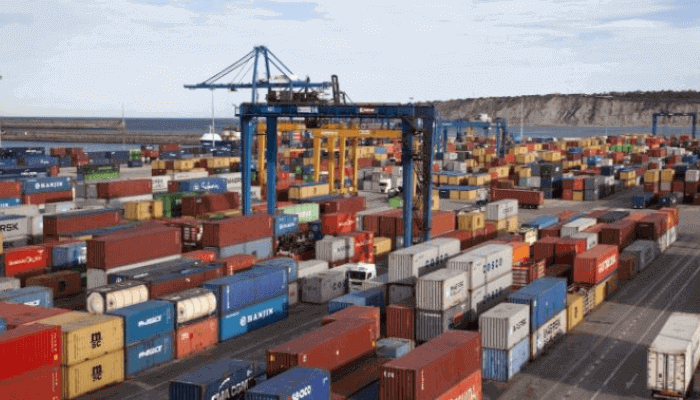
The Chairman Ports Operations and Security Committee, Nigerian Ports Consultative Council (NPCC), Capt. Iheanacho Ebubeogu, says the Nigerian Government has secured a 746 million pounds facility for the rehabilitation and modernisation of Apapa and Tin-Can Island ports.
Reviewing port operations and security in the second quarter of 2026, Ebubeogu said that the facility would support the transformation of the ports to green and smart standards through automation and other digital technologies.
Ebubeogu told the News Agency of Nigeria (NAN) in an interview that the modernisation would provide improved cargo-handling equipment, reduce vessel turnaround time and cargo dwell time, enhance competitiveness and environmental sustainability and increase port revenue.
He said that the Nigerian Government had also awarded contracts for the rehabilitation of the Escravos breakwaters and Terminals A and C, while the Federal Executive Council (FEC) had approved a channel management consortium for the maintenance and deepening of channels serving Delta ports.
Ebubeogu said that Rivers Port Terminal 1, operated by PTOL, was also receiving attention under the modernisation programme, with berths one to three being upgraded to improve efficiency and safety.
He said that the Calabar Port would benefit from increased maintenance dredging, while McKaiva and Malero jetties would also receive attention to improve operations and facilitate trade along the eastern corridor.
The chairman said that the oversight of inland dry ports had been redesigned, with the Nigerian Ports Authority (NPA), as landlord, assuming responsibility for their administration in line with its statutory mandate.
He added that the Nigerian Shippers’ Council had transitioned to the Nigerian Port Economy Regulatory Agency, which would regulate tariffs, charges and rates of shipping companies and terminal operators.
Ebubeogu said that site clearing had begun at the Snake Island concession area as part of efforts to expand port capacity, attract investment and improve competitiveness.
He said that the logistics plan also included the construction of a standard-gauge, single-track freight railway from Apapa Bulk Terminal (ABTL) to Tin-Can Island Port, with junction works, an elevated urban section, a bay crossing and signalling facilities.
According to him, the railway, when completed, will reduce vehicular traffic along the Apapa corridor and facilitate cargo movement by rail and water.
“Seaports facilitate the African Continental Free Trade Area (AfCFTA) by providing high-capacity corridors for the movement of goods at lower costs.
“To benefit from AfCFTA, it is imperative to upgrade port infrastructure, digitalise operations, reform customs procedures, develop the fleet and implement an integrated master plan,” he said.
GIK/APA