



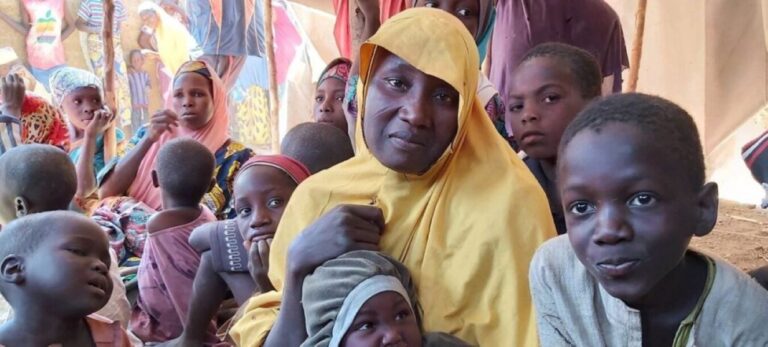
More than 66,000 Nigerians have fled to Niger and Benin since the beginning of 2026 – three times the number seen during the same period in 2025.
This has prompted the United Nations High Commissioner for Refugees (UNHCR) to call for $2 million to address the humanitarian emergency in these two neighbouring countries.
In an alert issued on Friday, the UN agency attributed this surge in displacement to intensifying violence and insecurity in northern Nigeria, which has forced thousands of people to abandon their homes and seek refuge across the border.
Niger is hosting the majority of these new refugees. By mid-October, nearly 60,000 Nigerians had arrived in the Tahoua and Diffa regions; the Tahoua region alone recorded approximately 36,300 arrivals in the span of just two months.
The situation is compounded by a lack of resources to register new arrivals. More than 34,000 people remain unregistered, which limits their access to humanitarian aid, social services, and identity documents, while also increasing their vulnerability to protection risks.
In Benin, the number of arrivals in border areas is also rising, where capacity for reception and intervention remains limited. This places additional strain on local communities and essential services.
The $2 million appeal launched by the UNHCR is intended to fund priority interventions between November 2026 and January 2027.
The primary objectives include registering and issuing identity documents to more than 44,000 people in Niger and Benin, as well as providing life-saving assistance to 52,000 people in Nigeria.
This new emergency arises against a backdrop of underfunding for humanitarian operations
in the Central Sahel. By the end of September 2026, the UNHCR’s response in this region was only 27% funded, out of the $329.6 million required.
In Burkina Faso, Mali, and Niger, nearly four million people have been forced to flee their homes, including approximately 820,000 refugees and asylum-seekers.
This figure is nearly double the number of displacements recorded in October 2020, when the region had more than 1.7 million internally displaced persons and some 365,000 refugees.
TE/Sf/fss/as/APA