





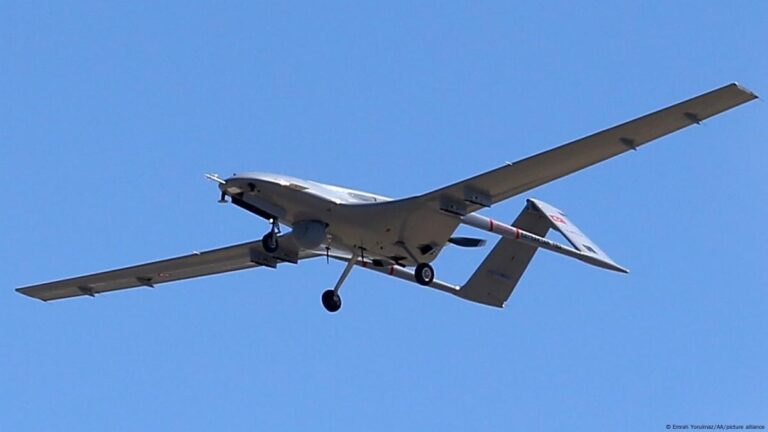
The Nigerian Aviation and security experts have urged the Federal Government to prioritise the adoption of modern technologies, particularly advanced drones, as a core strategy for confronting the escalating threats of terrorism and violent extremism across Nigeria.
The experts expressed deep concern that the menace was expanding rapidly while government efforts remained largely insufficient to curb the situation.
A drone is an unmanned aerial vehicle, sometimes referred to as an aircraft that operates without a pilot onboard. It can be controlled remotely by a human operator or fly autonomously using onboard computers, sensors, and GPS.
Speaking in an interview with journalists on Wednesday, United States–based Nigerian aviation expert, Femi Adeniji, stressed that Nigeria should abandon “outdated, manpower-heavy methods” and begin to deploy the same advanced technologies that have helped Western nations drastically reduce terror incidents within their borders.
Adeniji, who is the Chief Executive Officer of Nigame Aircraft Consult in the United States, acknowledged the importance of citizens in national security but warned that excessive dependence on human intelligence, especially in an environment burdened by mistrust and corruption, was risky.
He said that the world had moved fully into an era of advanced technology, pointing out that several countries now rely on sophisticated drones like the Resolute Eagle to combat crime and insecurity.
Unlike the small commercial drones commonly used in Nigeria, he said the Resolute Eagle is a military-grade, long-endurance unmanned aerial vehicle built for real-time surveillance, covert missions, and precision strikes.
According to him, the drone is particularly suitable for Nigeria’s terrain and security challenges because it provides both intelligence-gathering and offensive capabilities.
“This is an era of advanced technology. The best approach now for any serious government is the adoption of technology. For instance, I know the Resolute Eagle. This technology can be controlled from anywhere; the operator does not have to be close to the war zone.
“It can carry International Traffic in Arms Regulations-approved arms, cannot be seen or heard from the ground, and can record activities live as they happen. Those are the modern technologies that the government should be going for, not outdated equipment,” he said.
Adeniji added that the drone operates at 21,000 feet above sea level, has an endurance of eight hours, and can be rapidly deployed to conflict zones to monitor, track, capture, or disrupt terrorist movements.
Such capabilities, according to him, give security forces an upper hand through the element of surprise, an essential advantage in counter-terrorism operations.
He noted that Western nations have successfully limited terror activities by integrating intelligence, modern technology, and swift military action.
Drawing lessons from the Iraq and Afghanistan wars, he said these tools significantly reduced casualties and improved precision in targeting terrorists.
GIK/APA