



The Nigerian Upstream Petroleum Regulatory Commission (NUPRC) says that Nigeria produced a total of 443.25 million barrels of crude oil between January and October 2025.
According to crude oil and condensate production data from the NUPRC report, this translates to an average of about 1.46 million barrels per day.
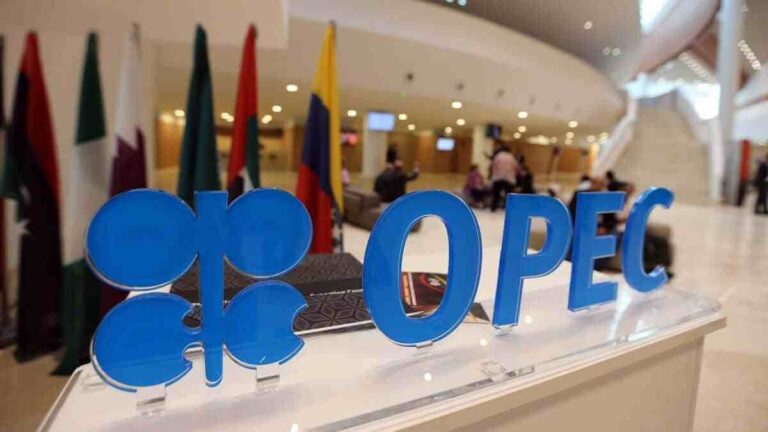
The report noted that despite intermittent improvements, the output level meant that Africa’s largest oil producer remained below its 1.5 million barrels per day of crude oil quota set by the Organisation of Petroleum Exporting Countries (OPEC) achieving about 97 per cent of the quota during the 10-month period.
The breakdown of the figures shows that January recorded the highest crude oil production during the period at 47.70 million barrels, while February was the weakest month at 41.02 million barrels.
The output recovered in March and April and remained relatively strong through May, June, and July before easing in August and September. Crude oil production in October stood at 43.44 million barrels.
In addition to crude oil, Nigeria produced 60.55 million barrels of condensate between January and October. This comprised 17.38 million barrels of blended condensate and 43.17 million barrels of unblended condensate, reflecting the growing role of condensates in supporting overall oil output.
Combined crude oil and condensate production during the period amounted to 503.79 million barrels, equivalent to an average total oil production of about 1.66 million barrels per day.
However, this performance fell short of the Federal Government’s 2025 budget of oil production benchmark of over 2 million barrels per day, which covers both crude oil and condensate.
At an average of 1.66 million barrels per day, Nigeria underperformed the budget target by about 340,000 barrels per day, representing a shortfall of roughly 17 per cent, despite condensate volumes boosting headline production.
Data from the commission show that average daily oil production in October stood at 1.60 million barrels per day, comprising 1.40 million barrels per day of crude oil and about 196,000 barrels per day of condensate. This placed Nigeria’s crude oil output for the month at 93 per cent of its OPEC allocation.
The continued gap between actual production and both OPEC and budget benchmarks has implications for government revenue and foreign exchange earnings, as crude oil exports remain a major source of fiscal funding for Nigeria.
Meanwhile, the newly appointed Chief Executive of the Nigerian Upstream Petroleum, Mrs Oritsemeyiwa Eyesan, has pledged to reposition Nigeria’s upstream oil and gas sector, boost investments, and raise oil and gas production.
Eyesan, who formally assumed office on Tuesday, December 23, 2025, following a handover from the immediate past Chief Executive, Gbenga Komolafe, has outlined her vision during her first town hall meeting with the management and staff of the commission.
GIK/APA