





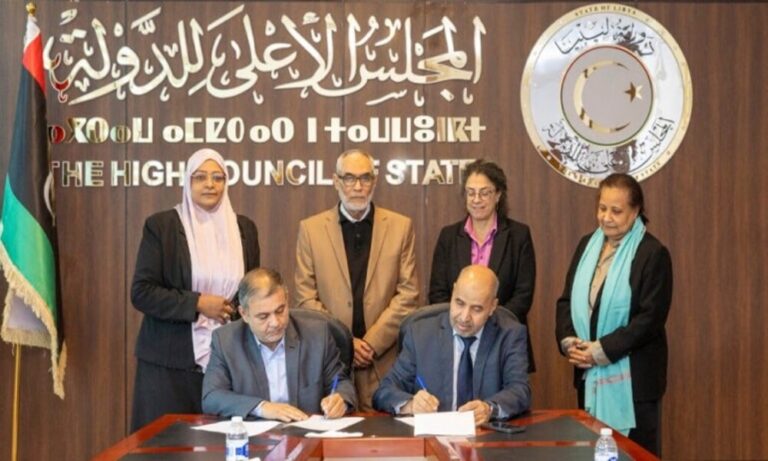
The Tripoli Central Council of Elders and Notables has formally endorsed the election of Salah al-Kamishi as the new Chairman of the High National Elections Commission (HNEC), describing the move as a vital step toward restoring popular sovereignty.
In a statement released on January 7, 2026, the Council welcomed the results of the internal vote held by the High Council of State (HCS) in Tripoli, which saw al-Kamishi secure 63 out of 103 votes to defeat his rival, Aref al-Tir. The Council views the renewal of the HNEC board as a necessary end to the institution’s interim leadership and a way to break the prolonged political deadlock that has stalled Libya’s democratic transition.
The Council emphasized that this administrative shift is a direct response to the will of the nearly 2.8 million Libyan citizens who registered to vote before the 2021 electoral process was suspended. According to the elders, the previous leadership failed to provide a transparent explanation for the “force majeure” that halted the vote and was increasingly perceived as biased toward specific factions in the ongoing conflict. By supporting al-Kamishi and a reconstituted board, the Council argues that the electoral body can finally distance itself from institutional paralysis and refocus on its sovereign role in organizing national parliamentary and presidential polls.
However, the appointment has immediately ignited a fresh constitutional dispute between Libya’s rival governing bodies. While the Tripoli-based Council of Elders celebrates the move, the eastern-based House of Representatives (HoR) has rejected the election as “unlawful” and a violation of the 2015 Libyan Political Agreement. HoR Speaker Aguila Saleh has countered by proposing the formation of a separate seven-member specialized committee to oversee future elections, arguing that the HCS lacks the legislative authority to unilaterally replace the current HNEC chairman, Imad al-Sayeh.
Despite the escalating friction in Rabat and Benghazi, the Tripoli Central Council remains firm in its stance that legitimacy must emanate solely from the ballot box. They have called on all national and international stakeholders to support the newly elected leadership to ensure that upcoming elections, tentatively targeted for mid-2026, are free, inclusive, and transparent. For the elders and notables, this transition represents the only viable path to ending the cycle of interim governments and restoring a unified, democratic authority to the country.
MK/AK/Sf/fss/abj/APA