



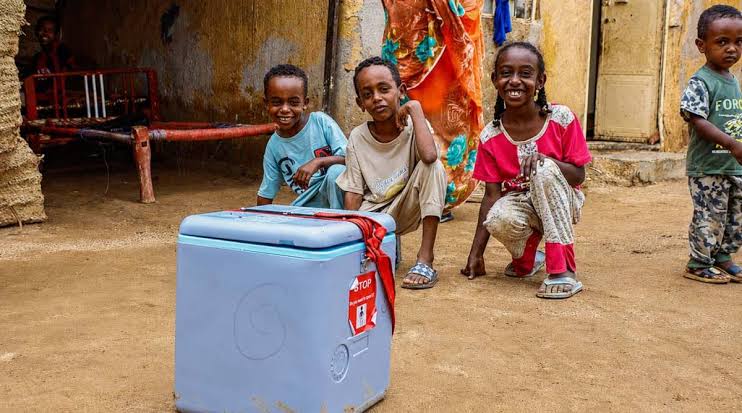
The World Health Organization (WHO) said Uganda and four other African countries have been cleared of recent polio outbreaks after independent assessments found no evidence that the disease is no more spreading, according to a WHO’s statement seen by APA on Monday.
This comes after an Independent Outbreak Response Assessment (OBRA) had carried out technical assessments between January and June this year and confirmed that the transmission of poliovirus type 2 has been interrupted in Burundi, Ghana, Guinea-Bissau, Republic of Congo, and Uganda. For Uganda, the announcement marks progress in efforts to protect children from a virus that can cause permanent paralysis. But health officials say the country cannot afford to relax its vaccination and disease surveillance efforts.
“While this is an important milestone, it is not the end of the journey,” said Mohamed Janabi, WHO Regional Director for Africa. “Continued vigilance, strong surveillance and high immunization coverage remain essential to protect children and prevent future outbreaks,” Janabi added.
Polio is a highly infectious viral disease that mainly affects children. It can cause permanent paralysis and, in severe cases, death. Uganda detected poliovirus in May 2024, prompting health authorities to strengthen surveillance and outbreak response activities.
The response involved coordination between national and local health authorities, vaccination activities and efforts to identify possible cases and virus circulation. The country also upgraded laboratory capacity earlier this year, strengthening its ability to detect poliovirus and other vaccine-preventable diseases.
The latest assessment looked not only at whether new cases had been detected but also the strength of Uganda’s surveillance systems and the level of immunity among the population. The closure therefore means that the specific outbreak has been interrupted. It does not mean Uganda is permanently free from the risk of polio.
According to WHO, the experiences of the five countries show the importance of finding cases quickly and vaccinating children before the virus has a chance to spread.
MG/abj/APA