



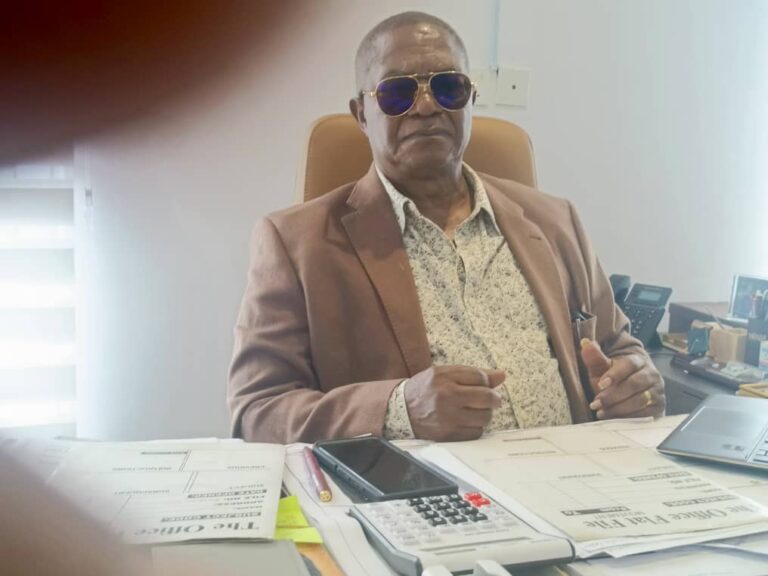
A Nigerian oil industry expert and former managing director of Falcon Corporation, Prof. Joe Ezeigbo says that Nigeria fails to benefit from rising global oil and gas prices because of poor management and weak national priorities.
Prof. Ezigbo told Realnews magazine, a Nigerian online publication, in an interview in Lagos that the current geopolitical tensions in the Middle East have pushed oil prices upward, creating a potential revenue windfall for oil producing countries like Nigeria.
But he, however, warned that Nigeria may once again fail to translate the opportunity into tangible benefits for its citizens.
“In Nigeria, the influence is fantastic because it means our oil prices are going up,” he said. “What we need to do at this moment is to ensure we increase oil supply. That means more money for the economy.”
Despite the potential gains, Ezigbo lamented that Nigeria has historically struggled to manage oil revenues effectively.
According to him, the country often experiences a cycle in which potential gains are quickly lost because the benefits are not widely distributed across the economy.
“In areas where we should gain everything, we seem to gain, lose, gain, lose,” he said. “The wealth filters into a few pockets, and that’s the end of it. The greater Nigeria that should benefit end up not benefiting.”
Ezigbo stressed that the key issue is not the availability of resources but the inability to manage them in a way that improves the lives of the ordinary citizens.
He said that policymakers should begin to focus on how national wealth could be allocated to serve the broader population rather than a small elite.
“The question we should ask ourselves is whether whatever gains we get will be used for the benefit of the people,” he said.
The former Falcon Corporation chief executive added that Nigeria possesses enormous potential to compete with any country in the world if its resources are managed properly.
“We have a lot of potential to do anything, be anything, go anywhere and stand tall side by side with any country in the world,” he said, adding that the country’s failure to maximise opportunities continues to limit its economic growth and development.
Ezigbo urged Nigerian policymakers and citizens alike to rethink how Nigeria manages its natural resources in order to ensure that future windfalls translate into meaningful improvements in living standards.
“The issue is not whether the opportunity exists,” he said. “The issue is whether we will use it for the benefit of the nation.”
Speaking on the failure of the four state-owned refineries to function despite the billions of dollars spent on maintenance and rehabilitation of the refineries, the oil and gas expert said that the root cause of the problem was not technical but systemic.
He attributed the persistent failure of the refineries.on corruption and deep institutional inefficiencies.
“The refineries should have been sold a long time ago,” he said.
According to him, the continued underperformance of the refineries reflects deeper governance problems within the Nigerian system.
“We are Nigerians; that is why we must sell them,” he said. “We are not capable of running them properly because we are too hungry as a nation.”
Nigeria, Africa’s largest crude oil producer, has four state-owned refineries located in Port Harcourt, Warri and Kaduna with a combined installed capacity of about 445,000 barrels per day. Yet for decades the refineries have operated far below capacity due to poor maintenance, technical failures and repeated operational shutdowns.
GIK/APA