



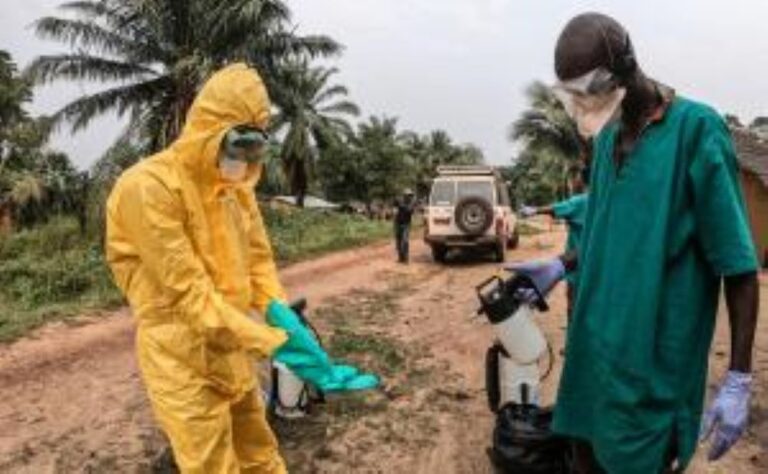
The United States announced an over $1 million new funding to Tanzania to strengthen the East Africa country’s preparedness and readiness to fight ebola caused by the Bundibugyo virus.
This is according to a statement issued by the US Department of the State.
This support comes in response to recent ebola outbreaks reported in the Democratic Republic of the Congo and Uganda, reinforcing ongoing efforts to protect the health and safety of Tanzanians.
While Tanzania has not recorded any confirmed ebola cases, the country continues to proactively intensify preparedness measures based on the national contingency plans.
Given the frequent cross-border movement with neighboring countries, these actions are aimed at ensuring the country remains vigilant and well-prepared to prevent, detect, and respond to any potential ebola threat.
Immediately following the official announcement of the outbreak in the region, the Ministry of Health convened technical directors, U.S. government agencies, and international partners to coordinate preparedness efforts and align response activities nationwide.
This close collaboration reflects the strong partnership between Tanzania and the United States in protecting public health and strengthening regional health security.
“The United States government is providing more than $1 million (approximately 2.63 billion TZS) in new and reprogrammed funding, together with extensive technical expertise, to strengthen Ebola preparedness in both Mainland Tanzania and Zanzibar,” the statement said.
According to the statement, U.S. support focuses on reinforcing disease surveillance, laboratory systems, infection prevention and control, case management, risk communication and community engagement, preparedness at points of entry, emergency coordination, and workforce development in regions at greatest risk of cross-border transmission.
U.S. support will be delivered through three coordinated lines of effort: U.S. Centers for Disease Control and Prevention’s (CDC) technical assistance to strengthen surveillance, laboratory systems, and infection prevention and control; the U.S. Department of State’s support for coordination, preparedness at points of entry, and community engagement; and Walter Reed Army Institute of Research’s (WRAIR) in collaboration with TPDF to reinforce civilian-military preparedness in priority border regions.
MG/as/APA