



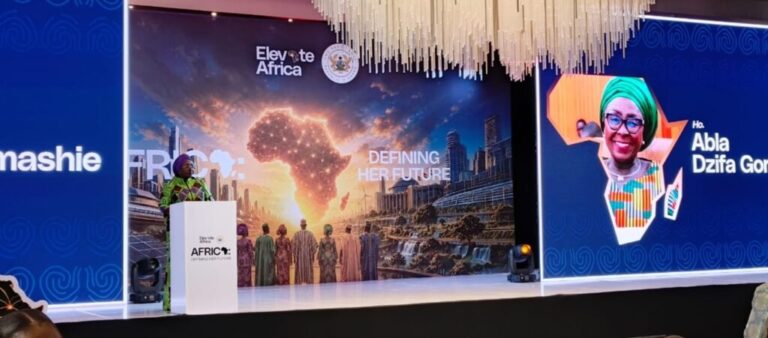
The second day of the 2026 Elevate Africa Annual Convening on Thursday in Accra, Ghana, which is dedicated to the creative economy, youth and the Diaspora, was devoted to intellectual property protection, access to financing for young people and the mobilisation of the diaspora.
“Our soft power – our capacity for cultural influence – should do more than just spark global interest; it should lead the world to embrace what we have to offer,” stated Olori Atuwatse III, Queen Consort of the Warri Kingdom in Nigeria and co-founder of Elevate Africa.
Citing examples such as Afrobeats, Nollywood, and Kente, she advocated for economic models that empower Africans to own their creations, distribute them and reap the full benefits.
“We must go further and ensure that the next generation also inherits the institutions that will allow them to thrive through what is uniquely ours,” she said, calling for stronger support for young entrepreneurs – specifically through better access to capital, markets and positions of responsibility.
In her view, young Africans should no longer be seen merely as the leaders of tomorrow, but as active participants in the present.
She urged institutions to nurture their creativity and capacity for innovation, helping to transform their initiatives into sustainable economic opportunities.
The Elevate Africa co-founder also called for the deeper integration of the diaspora into the continent’s development – moving beyond simple financial remittances.
She specifically encouraged fostering investments, partnerships, and the exchange of skills between Africa and African-descendant communities living abroad.
“Our diaspora has a place among us. It is much more than just a means to an end,” she argued, asserting that people of African descent should be viewed as full partners in shaping Africa’s future.
In her speech, Ghana’s Minister of Tourism, Culture and Creative Arts, Abla Dzifa Gomashie, called for the cultural and creative industries to be transformed into engines for economic integration and wealth creation.
She lamented that while African culture is frequently celebrated for its artistic potential and influence, the creators themselves often fail to reap a fair share of the financial rewards generated by their work.
“African music, film, fashion, theatre and performing arts, folklore, crafts, and digital content cannot remain mere cultural exports – a form of ‘soft power.’ They must become strategic drivers of economic integration and wealth creation across the continent,” she stated.
The Minister emphasized the need to strengthen intellectual property protection and copyright mechanisms, ensuring that the revenue generated from the international distribution of African works provides greater benefits to the creators and their communities.
She also announced that the inaugural African Festival of Arts, Culture, and Creativity (FESTA 2026) would be held in Accra from December 9 to 12, in collaboration with the African Union Development Agency (AUDA-NEPAD).
According to the minister, this initiative aims to foster investment, entrepreneurship, and innovation within the creative industries, while also contributing to job creation for young people and women. It is intended to bring together policymakers, investors, African Union member states, and representatives of the diaspora.
“Creating is not enough.” “Consume what Africa’s youth produce,” Abla Dzifa Gomashie said, calling on consumers to support local goods and help build value chains that benefit creators and producers.
Founded in 2024 by Ogiame Atuwatse III, the 21st Olu of Warri, and Olori Atuwatse III, Elevate Africa hosts an annual Pan-African gathering dedicated to promoting leadership, governance, trade, investment, culture, and heritage.
The second day of the 2026 edition builds on Wednesday’s discussions regarding leadership and governance, with a focus on highlighting the role of the creative economy, the youth, and the diaspora in the continent’s transformation.
AC/Sf/fss/gik/APA