



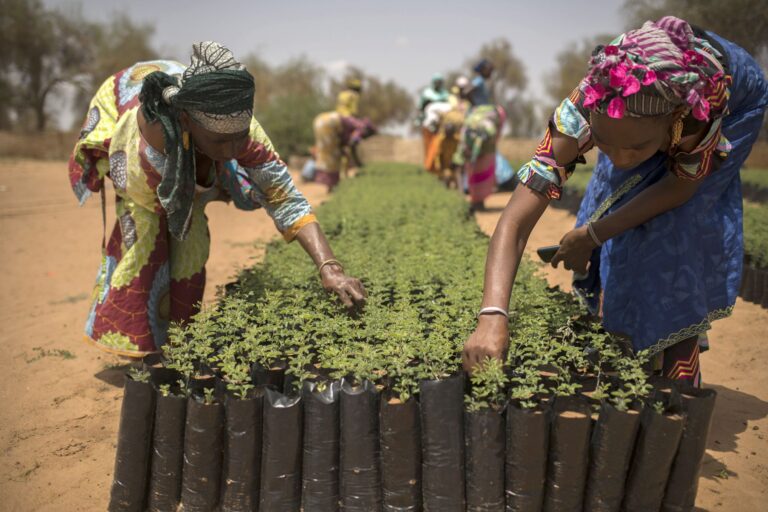
Senegal intends to accelerate the restoration of its degraded lands through the regional program SURAGGWA, which aims to rehabilitate 85,000 hectares across the Louga, Matam, and Tambacounda regions, while strengthening the resilience of rural communities in the face of climate change.
This objective was the focus of the first meeting of the program’s National Steering Committee, held on Friday in Dakar with the support of the Food and Agriculture Organization of the United Nations (FAO).
Funded by the Green Climate Fund (GCF), SURAGGWA (Strengthening the Resilience of Africa’s Great Green Wall) is part of a regional initiative spanning eight Sahelian countries: Burkina Faso, Chad, Djibouti, Mali, Mauritania, Niger, Nigeria, and Senegal.
Beyond restoring ecosystems, the program seeks to sustainably improve livelihoods and bolster food and nutritional security.
In Senegal, it is expected to reach 250,279 direct beneficiaries and 430,641 indirect beneficiaries.
Speaking at the meeting, Fodé Fall, Secretary General of the Ministry of the Environment and Ecological Transition, emphasised that land degradation, the spread of desertification, and the increasing frequency of climate-related events now pose major challenges for the population—particularly for farmers and herders.
restoration and the sustainable use of natural resources, highlighting Senegal’s commitment to ecological transition and climate resilience within the framework of the “Senegal 2050” national transformation agenda.
He specifically highlighted the importance of a rigorous, participatory process for selecting intervention sites, the inclusion of women and youth, and the empowerment of local communities.
According to the FAO, the program’s success will also depend on effective coordination among public institutions, technical and financial partners, and local stakeholders.
for achieving the established objectives.
The work focused, in particular, on reviewing the 2027 annual work plan and budget, interministerial coordination, environmental and social safeguard mechanisms, and the monitoring and evaluation framework.
Through SURAGGWA, Senegal aims to integrate land restoration into a broader strategy for climate resilience, the preservation of natural resources, and the securing of livelihoods for rural populations.
The challenge now lies in translating financial and institutional commitments into concrete achievements on the ground.
TE/fss/as/APA