





Human Rights Watch (HRW) has called on African governments participating in the United States’ “third-country” deportation programme to cancel or suspend the agreements, arguing that they are facilitating human rights violations against affected migrants and asylum seekers.
In a report released on Friday, the rights organisation said African states accepting deportees from the US were helping enable a policy that denies people a meaningful opportunity to challenge their removal and, in some cases, exposes them to persecution, torture or onward deportation to countries from which they had previously fled.
“Because the US government uses these agreements to shirk its responsibilities and to deprive people of their due process rights, the African governments that have entered into these agreements should terminate or suspend them,” said Michael Garcia Bochenek, HRW’s interim US programme director.
The 125-page report, titled “To Scare People: US Expulsions of Third-Country Nationals to Countries in Africa”, examines the experiences of more than 500 people transferred under the programme and draws on interviews conducted between February and July 2026 with 24 deportees sent to Cameroon, the Central African Republic, the Democratic Republic of Congo, Equatorial Guinea, Eswatini and South Sudan.
The group alleged that US authorities routinely deported people to countries where they had never lived, often without giving them a realistic chance to contest the transfer or explain fears for their safety.
It also documented cases in which receiving countries arbitrarily detained deportees or facilitated their return to places where they risked persecution or torture, contrary to the international legal principle of non-refoulement.
The report says some deportees included refugees and asylum seekers who had already been granted protection from removal to their home countries because of documented risks of abuse.
HRW said at least a dozen people identifying as lesbian, gay, bisexual or transgender were sent to African countries where same-sex relations or same-sex conduct are criminalised, leaving them unable to return home safely while also lacking effective protection in the receiving states.
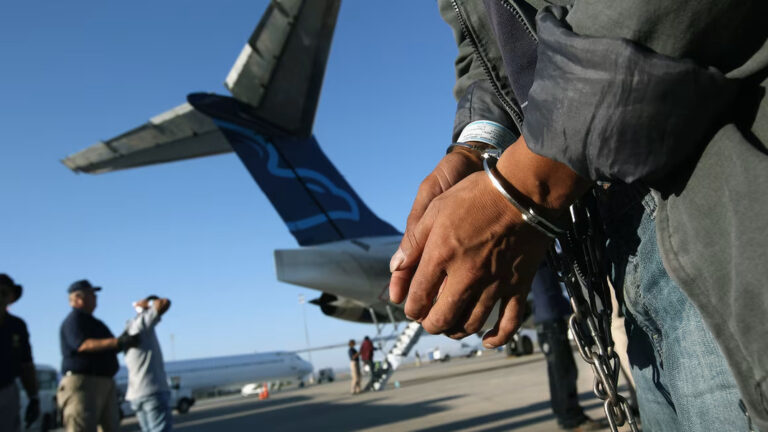
Interviewees also described harsh treatment during removals from the US, saying they were shackled for prolonged periods, received little information about their destinations and, in some cases, were denied access to medication or treatment for serious health conditions after arrival.
HRW called on participating African governments to uphold international protection obligations.
“Several of these African governments are not only complicit in US abuses but have violated the human rights of these deported people themselves,” Bochenek said.
The organisation said governments accepting third-country deportees should ensure that those transferred are not detained without legal basis and are protected from being returned to countries where they face persecution, torture or other serious harm.
The criticism comes as the Trump administration expands its use of third-country removals as part of a broader mass deportation strategy.
Under the programme, migrants who cannot be returned to their countries of origin, often because courts or immigration authorities have recognised they could face persecution, torture or other serious harm there, are transferred to third countries willing to receive them.
The policy gained momentum after the administration sought alternatives for removing migrants whose repatriation was complicated by legal protections, diplomatic obstacles or the refusal of home countries to accept returns.
The legality of the policy is now facing judicial scrutiny in the US.
The US Supreme Court is expected to hear arguments in December on whether “third-country” deportations violate constitutional due process protections or statutory prohibitions against sending people to places where they may face torture. The court has allowed the programme to continue while the case proceeds.
JN/APA