



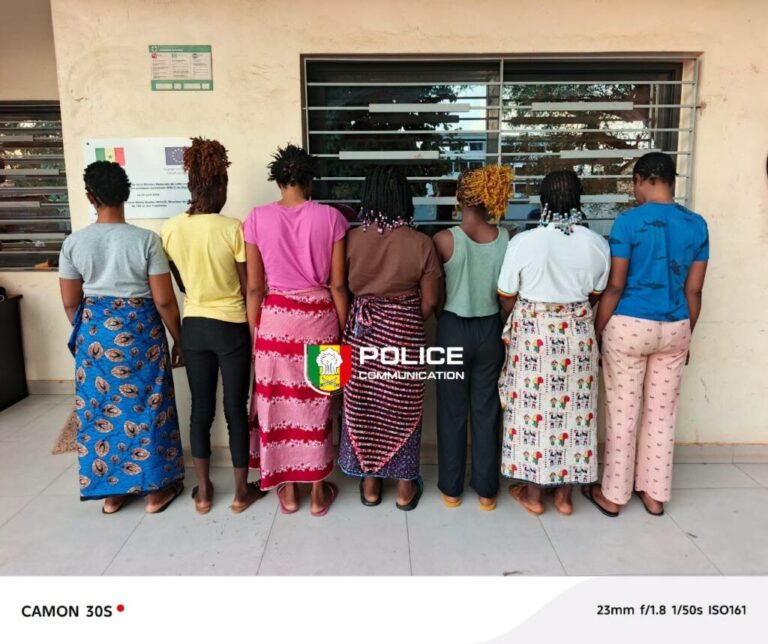
Seven young women, including minors, were found in an apartment in Ziguinchor, southern Senegal, as part of an investigation into an alleged human trafficking and sexual exploitation ring.
On September 15, the Ziguinchor regional branch of the National Division for Combating Migrant Smuggling and Related Practices (DNLT) brought two individuals before the public prosecutor; the pair are suspected of involvement in an alleged transnational human trafficking network for the purpose of sexual exploitation, the agency reported on Tuesday.
The two accused women face charges including criminal conspiracy, procuring, extortion, human trafficking for sexual exploitation, forgery and use of forged administrative documents, and complicity in rape.
The case began after reports of several young foreign women – potentially victims of trafficking – staying in an apartment in the Kandialang neighbourhood of Ziguinchor, in the country’s south,
according to the DNLT.
Investigations led to the discovery of seven nationals from countries in the sub-region, some as young as 14. They were taken to the agency’s offices for identity verification and questioning.
According to their statements, the young women were recruited in Sierra Leone – with some transiting through Guinea-Bissau – based on promises of employment or better living conditions, before being transported to Ziguinchor and subjected to sexual exploitation.
They implicated the two suspects, describing them as intermediaries for a network operating between Sierra Leone, Guinea-Bissau, and Senegal.
The victims also stated that a debt of 1.5 million CFA francs had been imposed on them; some had reportedly paid off the full amount, while others were still making payments. They also stated that they received 3,000 CFA francs per client, with the proceeds handed over daily to the recruiters.
According to investigators, notebooks found at the scene reportedly contained names and various amounts corresponding to the recorded earnings.
The young women also reported the confiscation of their identity documents and mobile phones, as well as ritualistic practices intended – according to their statements – to exert control over them.
Videos were reportedly made during these rituals.
The investigation also uncovered alleged irregularities regarding certain health record booklets.
Some victims claimed never to have visited a health district in person, maintaining instead that their documents had been created using old records – specifically involving the substitution of photographs and the alteration of details regarding their identity and age.
Investigators paid particular attention to the case of a victim allegedly recruited in Sierra Leone at the age of 14.
According to her testimony, her parents were misled about the nature of the job offer, and a forged identity document was created to make her appear of legal age before she was transferred to Guinea-Bissau.
She was subsequently placed under the control of another individual; after refusing to engage in prostitution, she reportedly suffered sexual violence before being transferred to Ziguinchor, where her exploitation continued.
When confronted with the statements gathered during the investigation, the two suspects reportedly admitted to the essential facts, acknowledging that they had recruited some of the young women and housed them for the purpose of sexual exploitation.
The two individuals were brought before the public prosecutor on September 15, while the investigation continues to determine the scope of the network and the roles played by the parties involved.
AC/Sf/fss/as/APA