





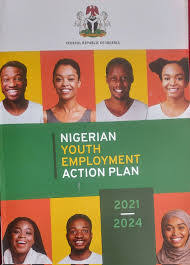
The International Labour Organisation (ILO) and the Federal Government of Nigeria have called for an actionable Nigerian Youth Employment Action Plan (NIYEAP) to boost job creation and improve the employability of young Nigerians.
Ms. Vanessa Phala, ILO Country Director for Nigeria, Ghana, Liberia and Sierra Leone, made the call on Monday at a consultation on the review of the youth employment framework in Abuja.
Phala, who was represented by Ms. Aisha Dirisu, National Project Coordinator, said that the revision provided an opportunity to develop an evidence-based, inclusive and private-sector-responsive framework.
She said that the revised framework should address youth employment, employability, entrepreneurship and decent work while tackling skills mismatches, informality, school-to-work transitions and limited access to finance.
According to her, the revision of NIYEAP will provide an important opportunity to assess previous implementation experiences and identify lessons for the new framework.
Phala said that stakeholders needed to determine what worked, what failed and the factors responsible for the successes and shortcomings recorded under the previous plan.
She stressed the need to integrate emerging opportunities in the digital and green economies into the revised NIYEAP 2025-2030, while artificial intelligence, creative industries, renewable energy, agriculture and manufacturing are sectors with significant potential for creating sustainable employment opportunities for young Nigerians.
Phala noted that effective youth employment will require stronger coordination among government institutions, social partners, the private sector, development partners and youth organisations.
She urged the participants to ensure that the consultation went beyond identifying priorities and instead produced practical and implementation-focused recommendations.
Phala urged stakeholders to translate their contributions into concrete actions, stressing that the success of NIYEAP 2025-2030 would depend on ownership, coordination and sustained commitment.
Meanwhile, Dr. Mohammed Dingyadi, Minister of Labour and Employment, called for the alignment of NIYEAP 2025-2030 with the revised National Employment Policy (NEP) 2025.
Dingyadi, represented by Mrs Cecilia Williams, Assistant Director, Employment and Wages Department, said that youth employment initiatives should complement Nigeria’s broader employment and labour-market policy architecture.
He said that such alignment was essential for achieving policy coherence, institutional coordination and effective implementation of youth employment programmes.
The minister stressed that decent work must remain central to the youth employment agenda, with jobs offering fair opportunities, appropriate working conditions, workers’ rights and social protection.
Dingyadi said that emerging sectors such as artificial intelligence, green jobs, renewable energy, climate-smart agriculture, creative industries and manufacturing offered significant opportunities for young Nigerians.
He urged stakeholders to draw lessons from NIYEAP 2021-2024 and develop a realistic framework capable of producing measurable improvements in youth employment and livelihoods.
Mr. Meke Ugwuogu, Director overseeing Enterprise Development and Promotion at the Ministry of Youth Development, said that the consultation was aimed at enriching the plan and ensuring sustainable employment opportunities for young Nigerians.
Ugwuogu said that the objective was to ensure that the jobs available to young people were not merely employment opportunities but sustainable jobs capable of improving their livelihoods.
He added that the review would address employment mismatches and promote inclusion by ensuring that disadvantaged young people were carried along and given opportunities to catch up.
Ugwuogu expressed optimism that contributions from MDAs, development partners and other stakeholders would produce a comprehensive plan capable of addressing Nigeria’s youth employment challenges.
The consultation, convened by Nigeria’s Federal Ministry of Youth Development, with technical support from the ILO through the SEESIN project under the GIZ-SKYE II Programme, brought together representatives of government Ministries, Departments and Agencies (MDAs), development partners and other stakeholders to review and strengthen the youth employment framework.
GIK/APA