





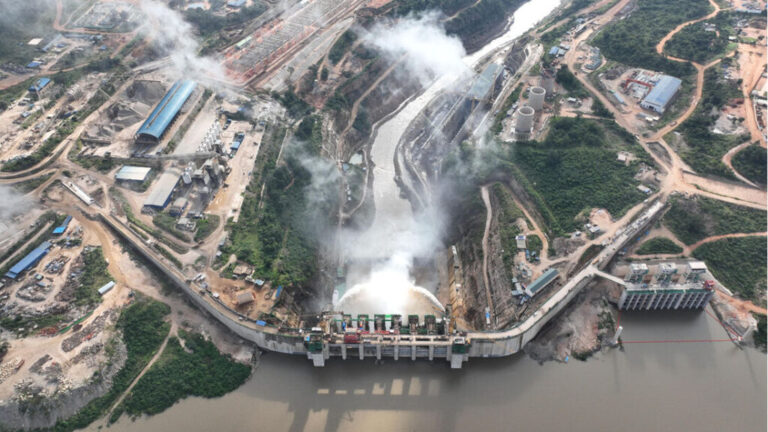
Kenya and Zambia have joined the Democratic Republic of Congo (DRC) and Burundi in the race to import surplus electricity produced by Tanzania, a prospect made possible by the commissioning of the Julius Nyerere Hydroelectric Power Plant (JNHPP), which significantly strengthens the country’s energy capacities.
The JNHPP, with a capacity of 2,115 megawatts, brings Tanzania’s electricity generation capacity to over 4,700 megawatts, while national consumption currently absorbs only about half of it.
This situation offers the country significant room to increase its electricity exports to neighbouring markets.
The available surplus, estimated at 2,375 megawatts, is arousing the interest of several countries in East Africa and the Great Lakes region, faced with growing energy demand and production deficits.
Zambia and Kenya join the DRC and Burundi, already engaged in discussions with Dar es Salaam to benefit from this new capacity.
These exchanges could help to strengthen the interconnection of regional electricity networks and promote better pooling of energy resources.
For Tanzania, the issue goes beyond just exporting electricity. The country intends to take advantage of its new capacities to support industrialization, secure supplies for households and businesses and increase its revenues through energy exports.
The commissioning of the JNHPP is also a major milestone in Tanzania’s strategy to reduce power shortages and position the country as a major energy supplier in the region.
In the medium term, increased electricity trade could help improve the stability of regional networks, while offering importing countries an additional source of energy to support their economic growth and industrial development.
TE/fss/gik/APA