





Morocco’s General Directorate of National Security (DGSN) has denied allegations contained in an article published by a French publication suggesting delays in investigating the disappearance of a French national in Rabat in 2024.
In a statement released on Monday, February 2, the DGSN said its services are continuing to investigate the case reported by Le Figaro, stressing that all procedures are being conducted in full compliance with the law.
The DGSN said it had taken note of the newspaper article, which it described as imprecise and based on claims attributed to certain parties involved in the case, alleging delays in the investigation and a lack of responsiveness by investigators to the family of the missing person.
According to the DGSN, Rabat police services were notified on April 13, 2024, of the disappearance of a French national from the apartment he was renting in the capital. Initial findings by judicial police officers, assisted by crime scene technicians, “revealed no evidence” foul play, notably in the absence of any signs of forced entry or theft, and given that the individual’s personal belongings, computer and electronic equipment, as well as a sum of money, were found at the scene.
The investigation was subsequently expanded to determine whether a criminal scenario could be established. Crime scene experts and teams from the National Forensic Science and Technology Laboratory thoroughly inspected and searched both the missing person’s apartment and that of an individual who had been with him prior to his disappearance, using advanced technical equipment. DNA samples were also collected for investigative purposes, but no clues or evidence supporting a criminal hypothesis were identified, the DGSN said.
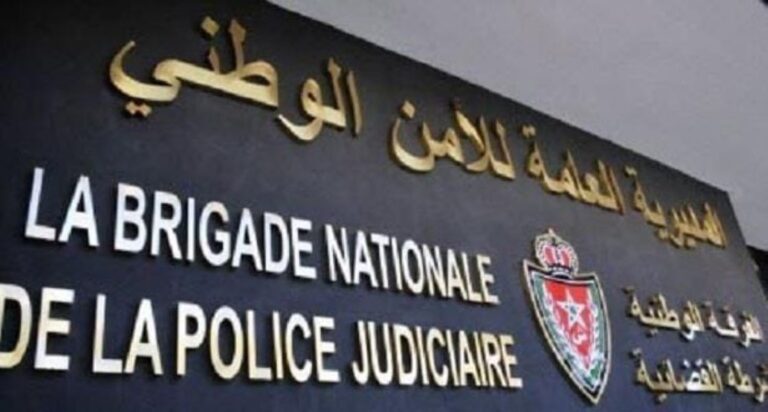
In an effort to clarify the circumstances surrounding the disappearance of the French national, who was 29 years old at the time, the competent public prosecutor’s office entrusted the case to the National Brigade of the Judicial Police (BNPJ) in Casablanca. The brigade interviewed all individuals who had been in contact with the missing person, communicated with him by phone or were part of his circle of acquaintances, resulting in more than 60 official interview and interrogation reports, according to the same source.
The DGSN added that investigators carried out technical analyses on several electronic devices belonging to the individual, without uncovering information that could help determine his whereabouts.
In addition, the itinerary of the cities he had visited in Morocco—namely Tetouan and Chefchaouen—was retraced, and investigators travelled to these locations to interview all persons he had met there, without success.
In the same context, the BNPJ, under the supervision of the competent public prosecutor, sent dozens of information requests and technical requisitions to telecommunications operators, banks and financial institutions, as well as to the Customs and Indirect Tax Administration.
These requests concerned the individual’s financial transactions, communications prior to his disappearance, and a foreign-registered vehicle he had used for a period in Morocco. These steps yielded no criminal suspicion and provided no new information on his location, the statement said.
Investigators also submitted requests, with prosecutorial authorisation, through international security cooperation channels to trace the missing person’s financial transfers. These efforts confirmed the same results as previous inquiries.
Contrary to claims reported by Le Figaro, and refuting allegations attributed to the investigative team, the DGSN stated that the family of the missing person was received on more than five occasions at the headquarters of the Regional Judicial Police Brigade in Rabat. The family was kept informed of developments in the investigation and was returned the personal belongings of their son, in accordance with an official report drawn up on instructions from the competent public prosecutor.
The National Brigade of the Judicial Police also responded to all requests from the French liaison officer in Morocco, including those relating to phone reports received by the missing person’s father suggesting his possible presence in several cities—Casablanca, Mohammedia, Ifrane, Azrou, Khenifra and Fez—as well as in certain mountainous areas of the High Atlas.
As a result, six search teams were mobilised and deployed across these locations, including one team that conducted field investigations for more than three weeks in the High Atlas region. All individuals who made such reports were interviewed, and those suspected of being the missing person were identified. Checks revealed that they were three individuals—one French national, one Estonian national and one Moroccan citizen—none of whom had any connection to the missing Frenchman.
To further advance the investigation, the BNPJ issued an urgent search notice to all National Security and Royal Gendarmerie services, seeking any French national matching the missing person’s description. These searches were extended to hospitals and psychiatric clinics, but proved unsuccessful. All testimonies collected indicated that the missing individual was suffering from serious psychological difficulties.
Regarding the hypothesis of religious radicalisation mentioned in Le Figaro, the DGSN said investigations conducted in coordination with the General Directorate of Territorial Surveillance (DGST) found no evidence linking the individual to extremist activity on Moroccan territory.
While providing clarifications on the progress of the investigation and rejecting what it described as false allegations, the DGSN stressed that the BNPJ continues to pursue the case in accordance with legal provisions, noting that the most recent legal measure in this regard was taken on January 20, 2026.
AK/sf/lb/as/APA