



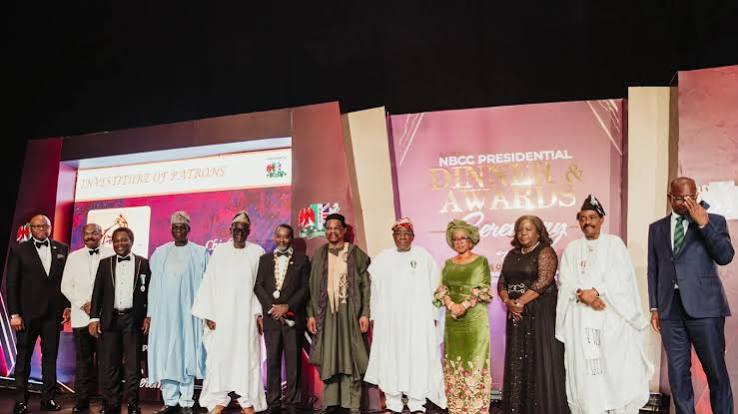
The stakeholders in Nigeria and the United Kingdom have called for closer business partnerships, productive investments and improved trade facilitation to unlock economic opportunities and promote shared prosperity in both countries.
Speaking at the 2026 Presidential Dinner and Awards Ceremony of the Nigerian-British Chamber of Commerce (NBCC) in Lagos on Tuesday, the stakeholders said that stronger collaboration among businesses, governments and relevant institutions was necessary to translate existing bilateral relationships into tangible economic benefits, including increased investment, job creation and improved productive capacity.
Mr. Abubakar Suleiman, Managing Director of Sterling Bank Plc, said that Nigeria should strengthen its productivity, infrastructure and human capital to compete effectively in global markets.
Suleiman said that access to international markets alone would not guarantee economic growth if businesses lacked the infrastructure, skills and institutional support required to produce and deliver competitively.
He cited the experiences of South Korea, Malaysia and Indonesia, saying their economic progress demonstrated the importance of coordinating industrial finance, infrastructure development, education and investment in human capital.
According to him, Nigeria must invest in people, shared infrastructure and effective governance to create an environment where businesses can compete globally.
He also urged corporate leaders to contribute to improving the business environment through collective advocacy for predictable policies, fair competition, accountability and effective public institutions.
Similarly, Mr Jonny Baxter, British Deputy High Commissioner in Lagos, said that stronger Nigeria-UK commercial relations required practical partnerships that delivered measurable business outcomes.
Baxter said that the success of the NBCC should be measured by the businesses that found new partners, investors that overcame market barriers and Nigerian enterprises that gained access to the UK market.
He urged the Chamber to strengthen collaboration with other British chambers, share market intelligence and develop practical solutions to challenges confronting businesses in both countries.
He said that the partnership should be mutually beneficial, with more British companies investing in Nigeria and more Nigerian businesses expanding into the UK.
In her speech, Nigeria’s Minister of Industry, Trade and Investment, Dr Jumoke Oduwole, said that the Federal Government of Nigeria was working to deepen Nigeria-UK commercial relations through improved market access, trade facilitation and investment in value-added sectors.
She said that the UK-Nigeria Enhanced Trade and Investment Partnership was helping to address trade barriers, while the Developing Countries Trading Scheme provided duty-free and reduced-tariff access for about 3,000 Nigerian products to the UK market.Buy Maps
Oduwole said that the government was also strengthening standards, testing and certification to improve the ability of Nigerian exporters to meet international requirements.
She highlighted ongoing financial and infrastructure partnerships between both countries, including investments by British International Investment and UK Export Finance in Nigerian businesses and infrastructure projects.
GIK/APA