



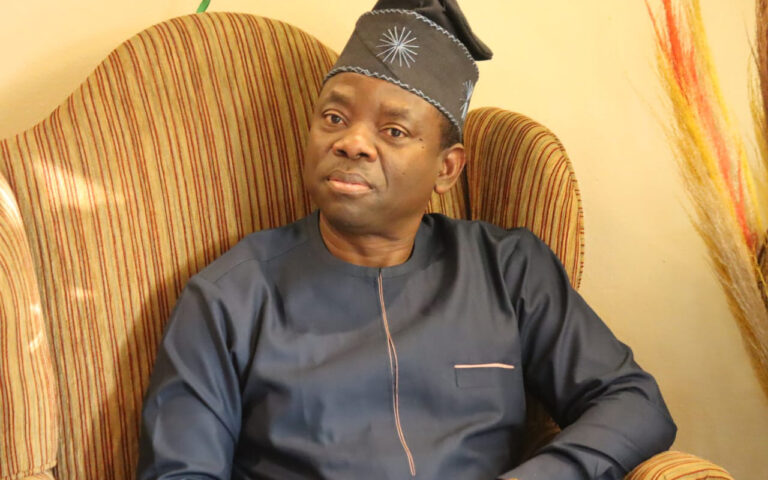
Nigeria’s Acting High Commissioner to South Africa, Ambassador Temitope Ajayi, says Nigeria will seek an African Union-led solution to recurring xenophobic attacks against Nigerians and other African migrants in the country.
Ajayi told Nigerian journalists participating in a study visit to South Africa on Friday in Pretoria during an engagement session that the decision was informed by the recurrence of attacks over the years and the need for a broader continental response to what he described as an African problem.
According to him, Nigeria plans to table the issue at the next AU Summit after consultations with other African countries affected by xenophobic attacks.
He said that the move followed several incidents recorded in South Africa in 2026, adding that Nigeria believed the recurring nature of the attacks warranted an extraordinary solution beyond bilateral engagement.
“According to the trajectory of xenophobic attacks, it started in 1995. Then we had another one in 2008, 2014, 2019, and we are having it now.
“Is that not enough to call for an extra-national solution to that problem? That is why Nigeria is taking the matter to the AU,” he said.
Ajayi explained that Nigeria’s approach was not aimed at naming or shaming South Africa but at finding a sustainable African solution.
“We are not going to aim to name and shame South Africa, but we are going to seek an African solution to what is essentially an African problem,” he said.
The envoy said that the proposed AU intervention would be pursued through diplomatic consultations and consensus-building with other countries, noting that South Africa had previously opposed an attempt by Ghana to raise a similar matter at the AU ministerial level.
He said Nigeria would, therefore, seek the support of other affected countries before presenting the matter at the level of African Heads of State.
Ajayi disclosed that Nigeria had so far, evacuated 1,490 Nigerians from South Africa through five government-sponsored flights operated by Air Peace, while private individuals and organisations had assisted in evacuating additional Nigerians.
He said the mission had cumulatively facilitated the return of about 1,699 Nigerians through government-sponsored evacuation and privately funded arrangements.
The envoy said that the recent threats had created a serious challenge for the mission, particularly as March and March group had issued calls for foreigners to leave South Africa by September 30.
He stated that the mission is not taking such threats lightly and that it is working to mobilise additional support to evacuate Nigerians, who wished to return home.
Ajayi appealed to religious organisations, businesses, philanthropists and other public-spirited Nigerians to support the evacuation effort.
Some Nigerians, he said, had been forced to abandon their homes, businesses and other property, following threats and attacks.
The envoy added that some Nigerians, who had returned home have received assistance from state governments, private organisations and other bodies to help them rebuild their lives.
He, however, stressed that the evacuation remained voluntary and that many Nigerians with valid residency permits had also chosen to leave South Africa because of fear for their safety.
Ajayi said that the mission had recorded no fewer than 10 incidents linked to protests and attacks targeting Nigerians in different parts of South Africa in 2026.
He explained that many of the incidents occurred outside major city centres and in areas where large numbers of migrants lived and conducted businesses.
He identified Sunnyside in Pretoria and parts of Johannesburg as among areas, where Nigerians and other foreign nationals could become particularly vulnerable during protests.
According to him, the mission also received reports of Nigerians being killed during encounters with security personnel, although he cautioned against attributing every such incident directly to xenophobic protests.
“Some of them are not directly from the protest but they were something that occurred based on an encounter with security forces in some cases,” he said.
Ajayi said that the mission had raised concerns over such incidents with the relevant authorities and expected offenders to be arrested and prosecuted.
He welcomed recent assurances by South African President, Cyril Ramaphosa, that the authorities are prepared to arrest and prosecute those responsible for xenophobic attacks.
The acting high commissioner said a high-level meeting between Nigerian and South African officials in Abuja in July, produced five key areas of understanding to address the crisis.
They included preventive measures to protect Nigerians, arrest and prosecution of offenders, de-escalation of inflammatory rhetoric by public officials, respect for the rule of law and cooperation on issues involving Nigerian nationals accused of offences in South Africa.
He said Nigeria had also called for the implementation of an early-warning mechanism between the two countries to enable them to share information and respond quickly to emerging threats.
According to him, Nigeria had signed its part of the memorandum establishing the mechanism, but South Africa was yet to complete its side.
He said the mechanism would help both governments identify potential disruptions and take preventive action before they escalated into violence.
Ajayi said the Nigerian government was not against the authorities prosecuting any Nigerian found engaging in illicit activities.
He noted, however, that stereotype and indiscriminate attack must stop.
The envoy said the mission had also been engaging Nigerian community leaders to educate nationals on responsible conduct and peaceful coexistence.
At the same time, he urged South Africans to distinguish between individual offenders and the wider Nigerian community.
“Don’t say these people are coming here to take your job,” he said, arguing that many Nigerians in South Africa were engaged in businesses, professional services and other legitimate economic activities.
He said Nigerians had also contributed skills and created employment opportunities for South Africans.
Ajayi said the major challenge in Nigeria-South Africa relations was increasingly at the people-to-people level rather than at the political leadership level.
He described relations between the two governments as “very cordial and excellent” but said negative perceptions of Nigerians remained widespread in parts of South African society.
He attributed part of the problem to a generational gap, arguing that many younger South Africans were not sufficiently familiar with Nigeria’s historical support for the anti-apartheid struggle.
Local media reports quoted Ajayi as saying that in spite of the tensions, economic relations between Nigeria and South Africa remained significant and called for the removal of regulatory barriers limiting greater trade and investment between both countries.
He said the Nigeria-South Africa Bi-National Commission remained the principal mechanism for implementing bilateral cooperation.
GIK/APA