





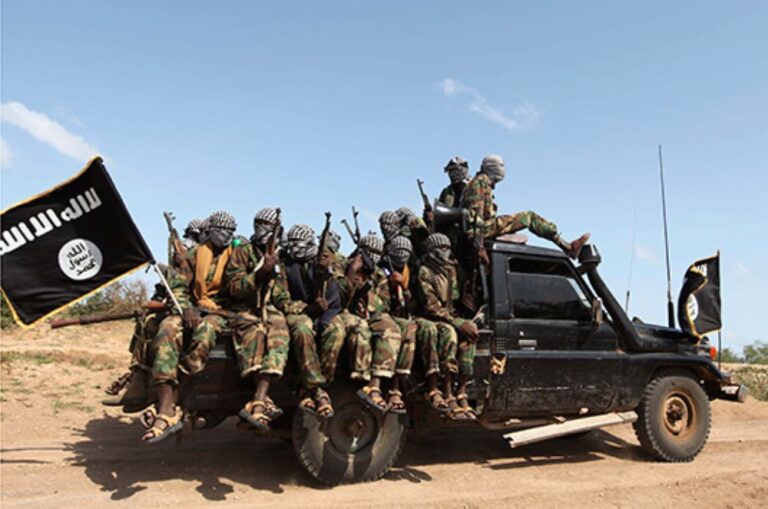
Militants of the Somali sect al-Shabaab, continue to control large swathes of rural southern and central Somalia, where they have established parallel judicial and taxation systems, according to a new report issued by Foreign Policy magazine.
The magazine says the group has managed to control significant territory despite two decades of African Union-led military interventions and billions of dollars support from the international community.
According to the report, the United States has provided an estimated $3.6 billion since 2007 to support successive African Union peacekeeping missions in Somalia, including nearly $2 billion through United Nations (UN) support offices and about $1.6 billion in bilateral assistance to troop-contributing countries.
The magazine says AU forces have pushed al-Shabaab out of major urban centres, including Mogadishu, but its militants continue to control or influence large areas of rural southern and central Somalia, where it has established systems of governance parallel to federal and regional institutions.
In July, US announced that it would end support for the United Nations Support Office in Somalia (UNSOS) by 31 December, effectively ending its financial backing for the current African Union Support and Stabilization Mission (AUSSOM).
Jethro Norman, a senior researcher at the Danish Institute for International Studies is quoted by the magazine as saying that al-Shabaab raises an estimated $100 million to $150 million annually through taxation, while Somalia’s government collects slightly over $250 million.
Foreign Policy magazine reports that al-Shabaab has since retaken much of the territory it lost during Somalia’s 2022-2023 military campaign.
During a 2025 counteroffensive, the group advanced to within about 45 kilometers of Mogadishu.
As foreign forces begin withdrawing, analysts cited by the magazine warn that al-Shabaab could exploit security vacuums, while uncertainty remains over whether Somali forces are prepared to assume full responsibility for national security.
MG/as/APA